Showing posts with label Early Church Fathers. Show all posts

Friday, January 01, 2016

The Early Church's Testimony on the Doctrine of Creation

Introduction
Recently in the long span of church history, the traditional view of the Creation, as recorded in Genesis 1, has come into question. Starting the in the nineteenth century, science became more and more secular. This secularization peaked in the middle of century, when Charles Darwin published his theory of evolution in his book The Origin of the Species. At the time, the divide between Creation and evolution was simply a divide between Christians and non-Christians. The divide continued that way until the early twentieth century. The famous Monkey Scopes trial made Christians look foolish for believing in Creation. Now some Christians, fearing looking foolish and ignorant to science, sought to make their faith compatible with evolution, producing groups like theistic evolutionists. Now Creation Christians not only had to combat atheist evolutionists, but also theistic evolutionists.

A growing debate between Creation theists and evolution theist is their origin. Both sides appeal to early church history. The Creation Christians will claim the church always believed in the Creation story as Genesis 1 records it. They claim that believing anything different will be acting against the orthodox doctrine the church has supported all of its history. The theistic evolutionists claim that the early church never read Genesis 1 literally, which opens the door for science, not the Bible, to explain how the universe came into existence. This paper will look at ten of the early church fathers and how they interpreted the first chapter of Genesis.

The Opposition

Before looking at the early church fathers, the opposition to the early church fathers must first be observed. Most of the early church fathers’ writings came in response to popular false teachings that began to penetrate the church. While the early church fathers did not have evolutionists pushing evolution upon the church, they did have philosophers whose philosophies entertained the minds of Christians. Some of these philosophies do even sound like evolution. The philosopher Epicurus taught the universe began when small particles began banging together in empty space. Hippolytus expanded on Epicurus’s idea, even teaching that God Himself came about from these particle colliding. The particles of matter did not have an origin. They simply existed for all eternity, past, present and future. Other philosophers taught about a demiurge. Platonic philosophers, like Plotinus, believed that the spirit was good and that matter was evil. Therefore, the Supreme God, a spirit, could not make anything out of matter, for he would be evil. So these philosophers created a demiurge, a creator god, who was evil because he worked with matter.  While some Christians naturally knew these philosophies did not work with orthodox Christianity, many Christians did try to make their religion and these philosophies compatible. Because of these Christian compromising their faith, the early church fathers knew they needed to speak out against these false philosophies.

Justin Martyr
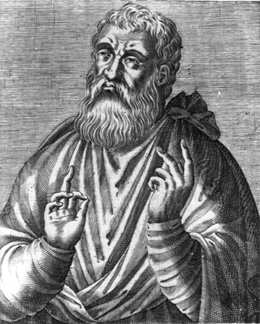


Justin Martyr referenced the creation story in many of his writings. Like many of his day, Justin Martyr recognized the origin of life and the earth to come from the divine God. In his Second Apology, Justin states that the reason Christians call God the Creator derives from the fact that God “created and arranged all things.” Justin takes the belief a step further and recognizes God the Son, Jesus, as the Creator. In another writing, Justin takes the belief another step further and specific recognizes God as the creator of human life. In one of his writings, Justin defends the doctrine of the resurrection. Justin believes that God has the power to give life to any human again because God gave life to humans in the first place, which, to Justin, demonstrates his omniscience. Furthermore, in the same sentence, Justin goes on to say that this first instance of human life came about when God inserted his power into the earth to make the man. This quote demonstrates Justin believed the life of man came about as Genesis 1 recorded.  Same lies true for Justin when it comes to Eve. Eve, coming from Adam’s rib, proved to Justin God’s role as the Almighty Maker of everything he saw. Once again, Justin’s quote verifies that Justin saw Eve as real. To him, Eve was as real as Elizabeth or John the Baptist who only lived a century earlier than he did.  Without a doubt, Justin Martyr believed in the creation story literally, especially when it came to believing in a literal Adam and Eve.

Irenaeus of Lyons


Just like Justin Martyr, Irenaeus felt the need to defend God as the Creator of all things. Irenaeus explains that God formed the heaven, earth and seas, as well as all their contents, with his Wisdom and his Word. Like Justin Martyr, Irenaeus takes the doctrine a step further. Unlike Justin Martyr, who focuses on the Son as Creator, Irenaeus specifies the Holy Spirit as active with the Father and the Son at the Creation. The language Irenaeus uses in his defense, such as “formed man” and “planted paradise” proves that Irenaeus believed in a divine God that created the world, as described in Genesis 1. Irenaeus also went further by defending the creation as ex nihilo, or out of nothing. Appealing to Luke 18:27, which says that everything is possible with God, Irenaeus boldly declared God as the first substance, thus requiring all other substances to flow from him. When God created the world, he created the first elements for the first time. Irenaeus also defending creation having over six days of twenty-four hours. Although Irenaeus uses it to erroneously predict the end of the world, it shows Irenaeus took the days literally.

Clement of Alexandria
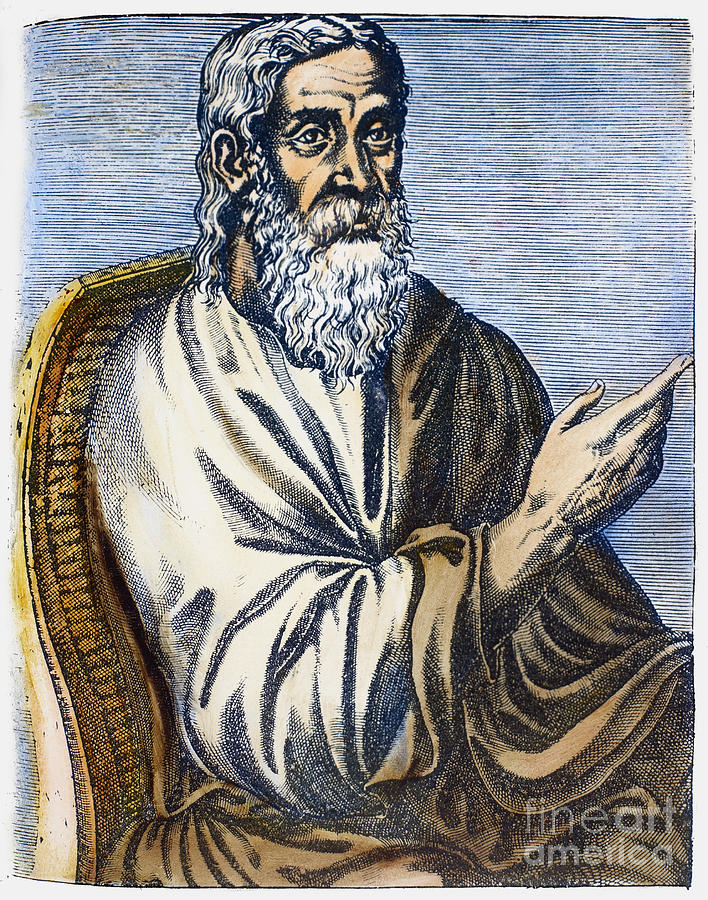


Young earth creationists or any Christian who interprets Genesis 1 literally would not want to quote Clement of Alexandria. Clement interpreted Genesis 1 allegorically, similar to how the Gnostics would have interpreted Scripture. For Clement, Genesis 1:1-5 describes the creation of a spiritual world, not the planet earth. The numbers for the days in Genesis 1 do not serve as ordinal numbers, according to Clement, but rather the value of their importance.  While this interpretation might seem unorthodox, or even heretical, to the literalist, Clement of Alexandria did contribute the orthodox doctrine of ex nihilo. As a matter of fact, Clement of Alexandria clearly states on three different occasions that God created the world out of nothing. On one of those instances, Clement credits the utter use of God’s will as the sole source of everything’s existence. In another instance, Clement explains that everything must come from out of nothing except God’s will alone. If humans came from a previously existing matter, then then humans might worship that matter, but if humans came from God’s will alone, then they must worship God alone.  While literalist Christians might want to shun Clement of Alexandria for his Gnostic-like interpretation of Genesis 1, they can learn from him and appreciate his practical reasoning on the importance of the ex nihilo doctrine.

Hermas


Hermas would have Irenaeus and Clement on the importance of the doctrine of ex nihilo. Hermas is most famous for his book The Shepherd of Hermas. His book begins with five vision. During the first vision, Hermas depicts God creating the world with his wisdom and by his strong, imperceptible power. After receiving five visions from the Good Shepherd in his book The Shepherds of Hermas, first mandates his readers to worship God as the creator who gives existence to everything non-existent and set them in motion. Not only does Hermas affirm God as the divine Creator, but he also affirms that the divine Creation formed the earth and everything in it out of nothing.

Tatian


Tatian might not seem like a candidate with whom young earth creationists or Christian literalists would want to side. Clement of Alexandria, Hippolytus, Irenaeus and Origen all deemed Tatian a heretic. Looking back at this point of history, historians believe some of the Early Church Fathers gave Tatian the title heretic because of his willingness to use Gnostic language in his writings. Looking at the remains of his writings, while using Gnostic language at some parts, Tatian holds to an orthodox belief in the death and resurrection of Jesus Christ. Therefore, Christians today can learn from Tatian, especially concerning the creation of the world. For Tatian, the creation begins with the eternal God. Nothing existed before, not even reason, even reason God had to begat. From God comes everything, from reason to matter. Tatian’s proves that not only did the early Christians support ex nihilo, but they strongly opposed Greek philosophers like Plato who declared matter to be eternal. To the early Christians, only God alone is eternal.

Theophilus of Antioch


Theophilus of Antioch knew what the Greek philosophers believed, and he did not fear challenging those beliefs. Theophilus knew that the Greek philosophers believed matter and nature existed eternally, just like God did. Using logic and reason alone, Theophilus refuted them all. If matter and nature exists eternally like God, Theophilus, then God cannot be the creator of all things. Furthermore, Theophilus states, if matter and nature exists eternally alongside God, then matter and nature stand equal to God. If the first two statements stand, God’s role as creator is limited, for just like man, he can only create with the resources he has. On the contrary, if God is the source of all things, then he cannot be limited. The logic and reasoning of Theophilus demonstrates the early church concerned itself the importance of believing in creation ex nihilo. Christians today should also display that same concern Theophilus had.

Tertullian


Tertullian constructs most of his doctrine on the creation in Against Hermogenes. Hermogenes, a Platonic philosopher, believed that matter existed eternally, that everything in existence came from that eternal matter, and that all things made of matter are evil because matter itself is evil. At first, Tertullian has to confess that Scriptures never explicitly say creation came out of nothing. He confesses that Christians believe in creation out of nothing as a presupposition. Yet Tertullian also tells Hermogenes that creation out of nothing only makes logical sense. First, if matter existed eternally, like God exists eternally, then matter is equal to God. Second, if matter is co-eternal with God and equal to God, then God is not omnipotent. Third, God also would not be omnipotent because part of God’s power is that he can create something out of nothing. If God needs matter to create, he ceases to be omnipotent. Fourth, when God does make something from something else, the Scriptures always mention it. For example, Genesis 1 explicitly mentions the sky produced birds and fish springing forth from the season. Therefore, one can conclude that when the Bible does not mention God making something from another thing, it must come from out of nothing. All in all, Tertullian could logically conclude that God made created the world out of nothing, making God the source of everything. Furthermore, Tertullian’s reasoning came from reading and understanding Genesis 1 literally. While Tertullian understood Genesis to be an incomplete account, he still believed it was a trustworthy account.


Basil the Great


Basil the Great wrote a sermon series on the opening chapter of Genesis, called The Hexaemeron. From reading these six sermons, the reader can tell Basil the Great took Genesis 1 very literally, as literally as possible. From his sermons, the reader can tell Basil wrote his own theology of the creation. He believed the source of the creation lies within the divine God. He believed the days in Genesis 1 as six periods of time twenty-four hours long, refuting anyone who disagreed, even Augustine! He also refuted Augustine on his allegorical approach to the Scriptures. In his Hexaemeron, he does not only refute Augustine, but also the Platonic philosophers. He disagrees with the philosophers who claim that matter is evil by pointing out how God made everything good. He even calls out the philosophers who claim their ancestors were animals, possibly the first building blocks of evolution. Basil the Great holds to an orthodox view of the creation because he reads and interprets Genesis 1 literally.

Origen


Unlike the early church fathers discussed so far, Origen refused to read the first chapter of Genesis literally. For him, believing in a literal reading of Genesis 1 meant thinking contrary to logic, reasoning and history. For example, he could not comprehend how the first three days had a morning and an evening when God had not yet created neither the sun nor the moon. Origen traded in a literal translation of Genesis for a spiritual interpretation. Origen believed for God to be truly omnipotent, a creation always had to exist to demonstrate his omnipotence. Using that logic, Origen concluded that God had already created a spiritual world prior to the events in Genesis 1. This spiritual world contained rational creatures that God could demonstrate his omnipotence to. According to Origen, Moses records this world’s creation in Genesis 1, not the planet Earth. God created the planet earth when a Fall happened in the spiritual world.

While theistic evolutionists might want to rejoice at a church father that did not believe in a literal interpretation, they might want to hold back on using him as an example. Origen applied his spiritual hermeneutic all over the Bible, causing him to doubt many historical events. For example, Origen did not believe that the Devil came and tempted Jesus.  Also, Origen stood alone in his hermeneutic and exegesis of Genesis 1. No bishop, pastor or church leader ever supported his stance.  Therefore, anyone could easily say Origen’s view on the creation was unorthodox.

Augustine of Hippo


Like Origen, Augustine did not interpret Genesis 1 literally, but unlike Origen, he took a different route. Whereas Origen read Genesis with a spiritual hermeneutic, Augustine read Genesis with an allegorical hermeneutic. According to Augustine, the “lights” created on the first day were the angels. Instead of the six days meaning six time periods twenty-four hours long, the six days represented six stages of increasing knowledge and wisdom of the earth. For example, on the second day, the angels had knowledge of the sky, and on the third day, the angels gained knowledge of solid land and its vegetation. The Bible has creation happening over six days in order that a day seven, which is the number for completion, could happen. That “seventh day” represents completion of knowledge and rest. Despite his allegorical hermeneutics leading to unorthodox exegesis, Augustine did side with many orthodox doctrines. He defended the earth’s origins coming from the divine God. He sided with his counterparts on the importance of believing the creation came out of nothing. Surprisingly, Augustine also strongly believed in a youth, so much so that he would attack anyone who proposed an old earth. While a theistic evolutionist might appreciate Augustine for not reading Genesis 1 literally, they might want to hesitate siding with him, for Augustine still sided with an orthodox understanding of the creation, especially when it came to a young earth

Conclusion

This article has looked at the preaching and the writings of ten early church fathers. From looking at the consistency of the writings, an orthodox doctrine of the creation comes out of it. The early church believed that all things, living and non-living, come from God. The church firmly held to the creation coming out of nothing, opposing all who thought matter existed eternally, like God did. Most of them held to a literal six-day creation. Those who didn’t, like Origen and Augustine, read the Bible in an extreme spiritual or allegorical way, so extreme, it would make any orthodox Christian uncomfortable. For a theistic evolutionist to pull out Origen or Augustine to claim the early church did not take Genesis 1 literally would be misrepresenting the early church. Still, even these men held to a divine God, creating a young earth, out of nothing. The early church fathers created this orthodox doctrine to defend against non-Christians who questioned and attacked their faith. Christians today can use these defenses of the early church fathers in order to also defend their orthodox, traditional faith.
 

Thursday, December 18, 2014

The Really Real Jesus

Introduction

A few years ago, I came across a discussion between teens and college-aged young adults, doubting if the Pilgrims arrived in Plymouth, Massachusetts on the Mayflower in 1620. At first thought, this conversation might provoke someone to shake his or her head, thinking how stupid this generation is for not believing a historical event important to the American nation. After further thought, however, no one can really blame this generation for questioning history. College students today, when they went through elementary school, heard a story of George Washington cutting down a cherry tree and then reporting to his father, “I cannot tell a lie. I cut down the cherry tree. In reality, this story never happened. This story circulated when George Washington sat in as President of the United States, in order to teach early Americans that George Washington always spoke the truth in honesty. In elementary school, students learn that Cristopher Columbus discovered America in 1492. Then, in high school, the same students learn the Leif Ericson discovered American about 500 years earlier, and more closely to what we know as [the United States of] America (Leif Ericson landed in present-day Newfoundland; Cristopher Columbus landed in the present-day Caribbean island of Hispanola). No wonder this generation doubts history so much! And that’s history that only happened a few centuries ago. How much more ancient history, where the ancient historians rarely differed between their history and religious myths. For example, the Trojan War really happened between the Spartans and Trojans, but the Iliad records the Trojan War had Greek gods and goddesses appearing to heroes on both sides. A teen or young adult reading the Iliad could doubt the Trojan War happened because Homer mentions Greek gods and goddesses involved in the war.

For if anyone wants to disprove the ancient Greek polytheism, all a person would have to do is take a hike up to Mount Olympus. When that person reaches the summit of Mount Olympus and observes no gods or goddesses there, he or she can easily conclude the Greek gods and goddesses do not exist. If the Greek gods and goddesses do not exist, then anyone can easily conclude that all the Greek myths, like the Iliad (even Greek history, like the Trojan War!), that have the Greek gods and goddesses in them cannot be trusted as historically accurate. Ancient religions, like the ancient Greek polytheism, has turned many people into atheists. Their atheism, which makes people believe God does not exist, makes people believe that any ancient writing mentioning a God must not be historically credible. Going further, if any of those ancient writings calls a person a God, both the writing and the person cannot be considered historically credible. In terms of Christianity, some atheists concludes that since God does not exist, Jesus does not exist, and if the Bible mentions Jesus existed as both God and man, they don’t take the Bible seriously as history. The atheist’s prejudices and presuppositions has led him or her astray. Jesus did exist outside the Bible, for many first century people, including hostile opponents, referenced Jesus. Even if the atheist admits Jesus existed, as some do, they state the Bible does not accurately record who Jesus is or what Jesus did. Therefore, the Christian cannot quit at proving Jesus existed in history. The Christian must insist that Jesus lived just as the Gospels record. This paper will not only prove Jesus existed, as the historical records demonstrate, but also that the Gospels accurately recorded the historical Jesus, using archaeology and the testimony of the early church fathers.

Background of the Need

Throughout history, especially recent history, everyone from atheists to so-called “intellectuals” have doubted if Jesus existed. If they do say Jesus existed, either willingly or reluctantly, they question if the Gospels historically record Jesus as he lived in the first century. The most recent and most famous is the Jesus Seminar. Consisting of Robert Funk and thirty of his friends, the Jesus Seminary sought to sort out the non-fiction Jesus and the fiction Jesus from the four canonical Gospels and the pseudapigraphal Gospel of Thomas. The members of the Jesus Seminar voted on the sayings of Jesus using four colored beads. Red meant Jesus definitely said it or something close to it. Pink represented Jesus probably said it, or said a somewhat similar idea, but multiple transmissions have left a little room for questioning it. Gray denoted that Jesus probably didn’t say it, but maybe it roughly represents an idea Jesus had. Black signified that Jesus never said, but rather the church sometime in history inserted that interpretation about Jesus. When all voting finished, only sixteen percent of events, seventeen percent of parables, and eighteen percent of the sayings of Jesus got the red bead vote to acknowledge them as historically accurate. The Jesus Seminar denied all of Gospels’ miracles, from the virgin birth to the resurrection. When the Jesus Seminary completed, they turned Jesus into a smart teacher and a social revolutionists, and nothing more. Therefore, Christians need apologetics that defend both Jesus as a real person in history and the Gospels as real historical accounts of the real Jesus.

Historical Records

Atheism denies the existence of God, but some atheists go even further and boldly proclaim that Jesus never existed either. Those atheists claim that only the New Testament mentions Jesus, and therefore they quickly conclude that Jesus never existed outside the imagination of the apostles. Such atheists, however, have concluded too quickly, and thus have concluded falsely, for historical records outside the Bible speak of Jesus.

Suetonius

Roman historians wrote about Jesus. Suetonius Tranquillus, an upper class lawyer, wrote a history of twelve Roman emperors after viewing the Roman archives of the emperors. Upon writing about Emperor Claudius, Suetonius records that Claudius removed the Jews from Rome. Suetonius says that Claudius removed the Jews because of their riots due to “the instigation of Chestus.” Christian scholars have good reason to believe that Chestus is a scribal error for Christ. Despite several records carefully recording the name of every Jew in Rome, not a single record writes down a Chestus in Rome. If Chestus did exist as a slave, as some skeptics have suggested, a good Roman historian, like Suetonius, would have provided some kind of biographical sketch explaining the minor character’s importance. No such biographical sketch exists, suggesting every commoner knew about the character. The error probably comes from the term Chrestiani, a profane name Romans gave Christians, including Suetonius. In fact, when Suetonius uses profanity in regards to Christians in an official historical recording, Suetonius displays his disdain towards Christians. Suetonius further demonstrates his hatred towards Christians when he later records that Christians follow an imaginary myth that causes misbehavior. Therefore, the Christian can conclude that Suetonius believed Jesus existed, for Suetonius blames the work of Jesus for upheaval between Jews and Christians in Rome.

Tacticus

In his final work, Roman senator and historian Cornelius Tacticus records Roman history from the fourteenth century A.D. to the sixty-eighth. Tacticus highlights the burning of Rome as an important event in Roman history. Tacticus records Nero started the fire, but blamed Christians as the cause. Tacticus then briefly describes Christians. He explains that Christians followed a Jesus of Nazareth, whom they called the Christ, who got executed by Pontius Pilate. Tacticus also looks down on Christians, for he calls them a people “hated for their abominable crimes” and later calls them “hateful of humanity.” Yet Tacticus too acknowledges Jesus. He calls Jesus a Christ, fully knowing the implications of the title. He recognizes Jesus as the founder of the movement the apostles expounded, commonly known as Christianity. He verifies for the Christian that Pontius Pilate had Jesus crucified. Furthermore, by mentioning Pontius Pilate, who many Roman historians mention, Tacticus puts Jesus in real history. Therefore, the Christian can conclude Tacticus knew Jesus existed, too.

Pliny the Younger

As a Roman senator and governor, Pliny the Younger took the time to investigate Christians in order to know how to deal with them. Pliny even went as far as sending out spies to spy on Christians to learn more about them. In a letter to Trajan, Pliny reports that the Christians recite a creed stating Jesus as Christ and God. Once again, Pliny recognizes the start of the Christian movement that had reached Rome. The movement started with Jesus. Pliny records a style of worship similar to that in Acts. Pliny even goes further and mentions that Christian worship included reciting a creed, declaring Jesus as God. He goes on to say their reverence for Christ as God does not allow them to worship another as God. In conclusion, Pliny not only recognized Jesus as real, but also recognized that some saw Jesus as God. Like Suetonius and Tacticus, Pliny stands as an enemy of Christianity, for he too declares the religion nothing more than a crazy superstition. Not even Pliny’s hostility towards Christianity could prevent him from denying the existence of Jesus.

Josephus

Not only did Roman historians record Jesus in history, but a Jewish historian did as well. Jewish historian Josephus speaks about Jesus in many of his works. Of all the works of Josephus, Testamonium Flavium and Antiquities talks the most about Jesus. The most famous passage comes from Testamonium Flavium. Even subtracting the material that has come into question, Joseph makes bold statements for a Jewish devotee. First, Josephus calls Jesus wise, and he also notes that other people knew Jesus as a wise man. Second, Josephus says Jesus does “surprising works,” possibly nodding at the miracles as supernatural acts. Third, Josephus states that Jesus faced opposition from Jewish leadership and Pontius. Fourth, Josephus confirms Jesus died on the cross at Pilate’s command. Fifth, although Josephus may not have believed it himself, he records the Christians believe Jesus rose from the dead, which led Christians to believe Jesus must be the Messiah. Josephus didn’t just believe Jesus existed, Joseph believed most of the Gospel claims as well.

Josephus mentions Jesus in Antiquities of the Jews, although indirectly. Antiquities of the Jews concludes with the close of Festus’s reign and Annas’s rule in the Sanhedrin. When Festus dies, Annas makes a power grab and starts making executive decisions. In one decision, Annas has James, “the brother of Jesus called Christ,” arrested, along with “certain others.” The certain others probably refers to Christians. To specify a common name such as James, Josephus identifies him as the brother of the Jesus. To specify a common name such as Jesus, Josephus identifies him as Jesus known as Christ. This name and title makes it clear that the original reader could have known about Jesus.

Rabbis

Not only did Jewish historians record Jesus in history, but Jewish rabbis did as well. Two of the most explicit mentions come from the transcripts of the Sanhedrin. These transcripts do more than just acknowledge Jesus existed. They acknowledge Jesus received the death penalty, and the time table matches the one found in the Gospels. Later on in the text, a rabbi declares Jesus practiced magic. This rabbi asserts he saw something supernatural happen, even if he does not call it a divine miracle. Although all the writings criticize and condemn Jesus, they prove Jesus existed nonetheless.

Archaeological Records

Previously, we have explored records and other writings in history that mention a Jesus of Nazareth, whom Christians believed to be the Messiah. Next, this paper will look at the Gospels as historically accurate. Before this paper can look at the Gospels, however, this paper needs to look at the archaeological record. The archaeological will not have any explicit mentions of Jesus by name. Rather, the archaeology will display the history, culture and geography of the first century Israel. In turn, when the Gospels display the same history, culture and geography, the reader can rest assured that the Gospel authors recorded the Gospels as accurate to history.

Coins

In Mark 12:13-17, the Pharisees and Herodians try to trap Jesus with a question about taxes. In this story, Jesus asks for a coin, and then he asks whose inscription is on the coin. They reply Caesar’s. Indeed, archaeology has revealed coins had Caesar’s name stamped on them. In fact, Caesars would use the coins to spread propaganda about themselves. Coin inscriptions would not only have the Caesar’s name, but also a title such as “Son of God” or “Son of a Divine one.” Such titles would remind the citizens that the previous Caesar, the current Caesar’s father, had reached a place among the gods, which verifies the current Caesar as the legitimate Caesar of Rome. Sometimes, if a Caesar pushed to make himself deity before death, he would change the coin inscription to something like “the holy one” or “the revered one.” Caesar Augustus, the emperor during the time of Jesus, had made this change by the time Jesus entered the ministry. Not only does Jesus reference this change in the Gospel of Mark, he might use it to make the Herodians, a political party supporting the Romans, to decide who is God: Jesus or Caesar.

Calendar

Another key inscription comes from a calendar found in Priene, a city located in western Asia Minor. The calendar made the birthday Caesar Augustus the new beginning to the year. The calendar writes that the Caesar’s birth is good news and that people should celebrate with good tidings toward each other. Both terms “good news” and “good tidings” comes the Greek word euanggelia, or gospel. What makes the Caesar’s birthday gospel, or good news, is that a god comes down to earth in human form. The inscription of the word gospel on the Roman calendar helps the Christian understand the use and importance of the word gospel in the four Gospels. Mark roughly borrows this Priene calendar inscription for the start of his Gospel. In Mark 1:1, Mark boldly proclaims that Caesar’s birth does not begin the good news, but rather the ministry of Jesus begins the good news. Altogether, the Romans used the idea of gospel just as much as the Christians living in the Roman Empire.

Urbanization of Galilee

Archaeology reveals that, during the ministry of Jesus, Herod Antipas, the tetrarch of Galilee, began building more in Galilee to make rural Galilee more urban. Antipas started by building two cities. One he named Sepphoris, and the other he named Tiberias. These two cities attracted many rural Galileans into city life, as well attracting many other people from faraway lands. With more people in the land, the demand for food and housing went up. In order to pay for food and housing, people would go into debt and have to work off their debt as tenants working in a farmer’s field. Jesus knew his currents events. Therefore, he taught lessons in Galilee that many Galileans could relate to. Such teachings consist of the parable of the wicked servant, the parable of the workers in the vineyard and the parable of the tenants. All these parables accurately describe life as a tenant farmer in first century Galilee.

Gospel Record

So far, we have explored records and other writings in history that mention a Jesus of Nazareth, whom Christians believed to be the Messiah. Most of these writings come from opponents of Jesus and opponents of Christianity. If Jesus didn’t exist, those opponents would have called the Christians out for believing in an imaginary person. Since these opponents take the time to refute Jesus, he must exist. Christians can use these writings to prove that Jesus existed to atheists. These accounts, however, can only get the Christian to prove Jesus existed. This leaves people to make any claim about Jesus they please. The Christian should not stop at proving the existence of Jesus. If the Christian believes the Bible is the inspired Word of God, then Jesus needs to be real like the Bible says. The Gospels writers took the time to record the words and actions of Jesus just as he lived them. Even as early as the church fathers, they could see the Gospels as historically accurate.

Four Distant Gospel Authors

Due to increased persecution in the 40s A.D., the apostles, including all four Gospel authors, split into four main mission groups to spread the Gospel. Paul and Luke most likely ministered to Greeks in Greece, as all Paul’s epistles hint. John most likely ministered in Asia Minor, as his seven letters in Revelation hints. Peter and Mark probably ministered together to the Romans in Rome. James and Matthew probably ministered to the Jews, wherever they were scattered. Looking at a map, the four Gospel authors wrote their Gospel accounts very far apart from each other, in both distance and time. This means they almost certainly did not collaborate with each other. Still, their stories concur with each other. Therefore, the reader can conclude these stories accurately account what Jesus did on this earth.

Against the Expectations

Some skeptical of the Gospels’ historical accuracy hypothesize the Gospel authors fictionalized Jesus in order to make him the Messiah. If the Gospel writers did fictionalize Jesus to make him the Christ, they did a terrible job. The first century Jews, including the Jewish Gospel writers Matthew, Mark and John, had expectations of the Messiah totally different to the character of Jesus. Still Matthew, Mark and John wrote down that contrary character Jesus displayed instead of writing down their dream Messiah. If the Gospel authors wanted their ideal Messiah, they would showed Jesus as a prophet who agreed with all the respected Pharisees’ and Sadducees’ religious teachings. Instead, they showed Jesus constantly in conflict with the Pharisees’ and Sadducees’ legalistic interpretation of the Law. If the Gospel writers wanted their model Christ, Jesus would heavily support a sovereign Israel and would fight Rome like Joshua fighting the Canaanites. Instead, Jesus never causes Rome any problems. In fact, he even helps a Roman centurion. The Gospel authors could have chosen to fictionalize Jesus to prove to Jews Jesus was truly the Messiah. Instead, they chose to accurately record Jesus as he lived in history, even if it meant losing Jewish followers.

Early Church Fathers

The early church fathers quickly accepted the books of Matthew, Mark, Luke and John as historically accurate accounts of the life of Jesus. The early church fathers had these four Gospels circulated throughout the whole Roman Empire. They quoted them freely in their letters. For example, Clement quotes all three synoptic Gospels in a letter to Corinth. Irenaeus writes that Polycarp, a disciple of John, read and quoted the Gospel of John constantly. When the early church fathers came together to write the creeds of the faith, they heavily relied on the four Gospels. When the creeds record that Pontius Pilate crucified Jesus, they align the crucifixion with history. Upon observing Christians, Pliny writes that the Christians read and recite the Gospels every Sunday. If the Christians read and recite the Gospels, they had to believe them to be true, including Jesus living. Justin the Martyr also observes Christians coming together to read a creed in his First Apology. Justin even writes down some of this creed. The creed not only records Jesus crucified during the time of Pontius Pilate, but also during Tiberius Caesar. All the early church fathers clearly conclude Jesus did exist as a real man in history, just as the four Gospels accurately record.

The Gnostic Gospels

The Gnostic gospels might sound like an odd choice to defend the historicity of the four true Gospels, but comparing the two, the Gnostic gospels reveal themselves to be fiction and the four true Gospels to be historical. The Gospel of Truth, written by the Gnostic Valentinus, does not record any action of Jesus, so it cannot be taken as historically true. The same goes for the Gospel of Thomas. The Gospel of Thomas does not have any narrative. While The Gospel of Thomas has several sayings that anyone can find in the other four canonical Gospels, it also contains saying heretical compared to the other Gospels. All this evidence adds up to a false Gospel. The Unknown Gospel, written in the second century, while free of heresy, consists of a compilation of verses from the other four canonical Gospels. This so-called gospel is merely a harmony of the true Gospels, furthermore attesting to the four Gospels historical accuracy. Same goes for the Gospel of Peter. The Gospel of Peter’s source comes from the three synoptic Gospels. Again, this attests to how the people of second century already saw the synoptic Gospels as historically accurate. The early church fathers quickly and easily rejected these Gnostic Gospels because they knew they were not historically credible. They knew they needed a historical account of the man Jesus, so that’s why they went with the historical Gospels of Matthew, Mark, Luke and John over the Gnostic Gospels.

Conclusion
 
Jesus did exist in history. Romans historians such as Suetonius, Tacticus and Pliny the Younger wrote about Jesus. Jewish historian Josephus wrote about Jesus. None of these historians would have sacrificed their credibility as historians for a fictional character, especially a fictional character whom they despised, as well as despising his followers. Jewish rabbis talk about Jesus in the Talmud. If Jesus wouldn’t have existed, they would have wrote down that in order to silence the new Christianity for falsely proclaiming a Messiah. Instead of denying his existence, they denied his words and deeds. Furthermore, Jesus existed in history exactly as the Gospels record it. They early church fathers immediately agreed with the testimony of these books, and they even supplemented it with more history. At the same time, the early church fathers quickly rejected the Gnostic gospels because they knew those books did not agree with Jesus either historically or theologically. All the Gospels match up with the exact same history and culture modern-day archaeology has revealed. The Gospel authors could not have collaborated their Gospels into pieces of fictions. They lived too far apart to collaborate. If they did collaborate, they did a horrible job, for they created a Messiah totally contrasting what the Jews declared the Messiah would be. Therefore, the Gospels must then accurate record the real, historical Jesus. If the atheists still wants to consider themselves intellectual, they must stop denying the existence of Jesus, as stated in the Gospels, for they are not doing themselves any favors.


1 Samuel 1: Not Striking Deals But Surrendering Desires

Introduction In those grade school English classes, whether English composition classes or public speaking classes, both taught me that a st...