Showing posts with label Messiah. Show all posts

Sunday, March 27, 2016

Cemteries Came Alive!

For I delivered to you as of first importance what I also received: that Christ died for our sins in accordance with the Scriptures, that he was buried, that he was raised on the third day in accordance with the Scriptures, and that he appeared to Cephas, then to the twelve. Then he appeared to more than five hundred brothers at one time, most of whom are still alive, though some have fallen asleep. Then he appeared to James, then to all the apostles. Last of all, as to one untimely born, he appeared also to me [Paul] …12 Now if Christ is proclaimed as raised from the dead, how can some of you say that there is no resurrection of the dead? 13 But if there is no resurrection of the dead, then not even Christ has been raised. 14 And if Christ has not been raised, then our preaching is in vain and your faith is in vain. 15 We are even found to be misrepresenting God, because we testified about God that he raised Christ, whom he did not raise if it is true that the dead are not raised. 16 For if the dead are not raised, not even Christ has been raised. 17 And if Christ has not been raised, your faith is futile and you are still in your sins. 18 Then those also who have fallen asleep in Christ have perished. 19 If in Christ we have hope in this life only, we are of all people most to be pitied. 20 But in fact Christ has been raised from the dead, the firstfruits of those who have fallen asleep. -1 Corinthians 15:3-8,12-20 ESV

Today, we join millions of Christians across this nation, if not across the whole world, celebrating the resurrection of our Lord and Savior Jesus Christ. Today, millions of Christian gather together at sunrise to worship the risen Jesus, meeting at parks, at beaches, at mountains, and even at cemeteries. Yes, you heard me right, cemeteries. Doesn’t sound right for Easter, does it? Cemeteries are something we associate more with Halloween than with Easter.

Christians meeting in cemeteries for church shouldn’t sound like a foreign idea. It’s a rich part of church history. While recent studies may show that Christians didn’t meet in the catacombs in Rome as we thought, early Christians did indeed meet in cemeteries. At first, it was just for practical reasons. During times of persecution, Christians met in cemeteries because cemeteries lied outside the city limits and would not catch the attention of the authorities. Also, with the growing faith, Christians needed a bigger place to come together and worship. What bigger a space than cemetery. But as time went by, meeting in a cemetery to have a deeper meaning.

52 The tombs also were opened. And many bodies of the saints who had fallen asleep were raised, 53 and coming out of the tombs after his resurrection they went into the holy city and appeared to many. -Matthew 27:52,53 ESV

These two verses are commonly forgot in the crucifixion and resurrection story, probably because only Matthew mentions this part of the story, and he really doesn’t put a lot of attention or detail. Who are these “saints” or, as the Greek literally puts it, “holy ones”? Are they Old Testament heroes of the faith? Maybe they aren’t. After all, if Moses or Elijah was to resurrect, walk into the city and say, “Hey, I’m Moses” or “Hey, I’m Elijah,” how could they really prove it? Even today with all our forensic science, we too would have a hard time proving the identity of someone before the time Christ, whether dead or alive. Then perhaps maybe these saints or “holy ones” are people living in the first century A.D. who believed in Jesus as the Messiah and died during Christ’s ministry, like Simeon or Anna from the Christmas story. But then again, the Jews living in Israel today will tell you they know the final resting place of all those Old Testament heroes. They’ve clearly marked, or should I say “decorated,” the tomb of Samuel (trust me, I’ve been there). So maybe it could be those Old Testament heroes. Either way, the truth remains. Upon Christ’s death, the tombs broke open. Upon Christ’s resurrection, the residents of the tombs came alive. The life-giving spirit has given life to those who were dead!

All the early Christians knew what this meant. No longer was death to be feared as the eternal separator and end to all. Their Lord, Savior and God had overcome death once. Now the Christians had hope. They knew by believing in Jesus, they too could look forward to overcoming death and coming back to life, just like the saints and holy ones who had also died and come back to life when Jesus died and came back to life. The early Christians lived out this truth daily in their lives. The laid hands and prayed healing on those who had communicable and fatal diseases. They preached the word of God where the word of God was banned, and they were martyred as a result. Most pertinent to my introduction, Christians worshiped in cemeteries, believing that they were worshipping side-by-side with their brothers and sisters in Christ who were not dead but merely just sleeping until Christ’s return. In fact, cemetery in Greek is koimeteria, which literally means “sleeping place.”

Part of my Easter tradition consists of calling my grandfather to wish him a happy Easter. My grandfather, turning 86 years old this June, is well aware of how close to death. I’m not ashamed or embarrassed to say such, for every holiday he reminds of how close to death he is. Despite being as healthy as an 86 year old can be, he’ll still say something like, “I’m not sure if I’ll be alive when you graduate from seminary or when you sister gets married” or he’ll tell me, “I’m just taking it one day at a time, for I might die tomorrow.” One time he even told me he was just waiting to die! As you can imagine, these calls become quite depressing. Yet when it comes to time to end the call, my grandfather never lets me say “goodbye.” He always says, “No, Graham, do not say ‘goodbye,’ for this is not goodbye. Say ‘so long for now,’ for this is until we talk again.” When Jesus rose from the dead, he removed all the “goodbyes.” He gave us hope that this is not the end, but the best is yet to come. So next time you walk by or drive by a cemetery, remember the resurrection of Jesus Christ, and then remember, this is not “goodbye,” this is just so long for now.


Friday, March 25, 2016

The Atonement: A Multifaceted Diamond

Introduction

The Merriam-Website Dictionary defines the term “multifaceted” as “having many facets or aspects.” When most people think of the word “multifaceted,” they probably think of diamonds, and rightfully so. Facets have an important role in shaping the diamond. The more facets a diamond contains, the more the diamond will shine, and the more beautiful the diamond will look.


The Merriam-Website Dictionary defines the term “atonement” as “the reconciliation of God and mankind through the sacrificial death of Jesus Christ.” Since Jesus found the church in the first century, the church has always recognized the death of Jesus on the cross as an act atonement, unifying the broken relationship between God and humanity. How the death of Jesus on the cross has brought atonement has not been as well defined. As church history has changed, so has its theology on the atonement. With every change in atonement comes controversy. Some Christians try to hold on to the older theory, while other Christians embrace the new theory, and it brings about debate, sometimes vicious. Instead of debating, Christian should discuss. Christians should not see these different, contrasting theories, but rather view them as different facets of the same diamond. When Christians can see these theories as multiple facets the diamond of the atonement, the gospel of cross will shine, and it will help Christians see the cross as beautiful, not as abusive or violent. This paper seeks to help Christians appreciate each facet of the atonement diamond by backing each theory with Scripture, observing each theory in its historical context, and providing an example of an exemplary church leader who held the theory.

Recapitulation Theory


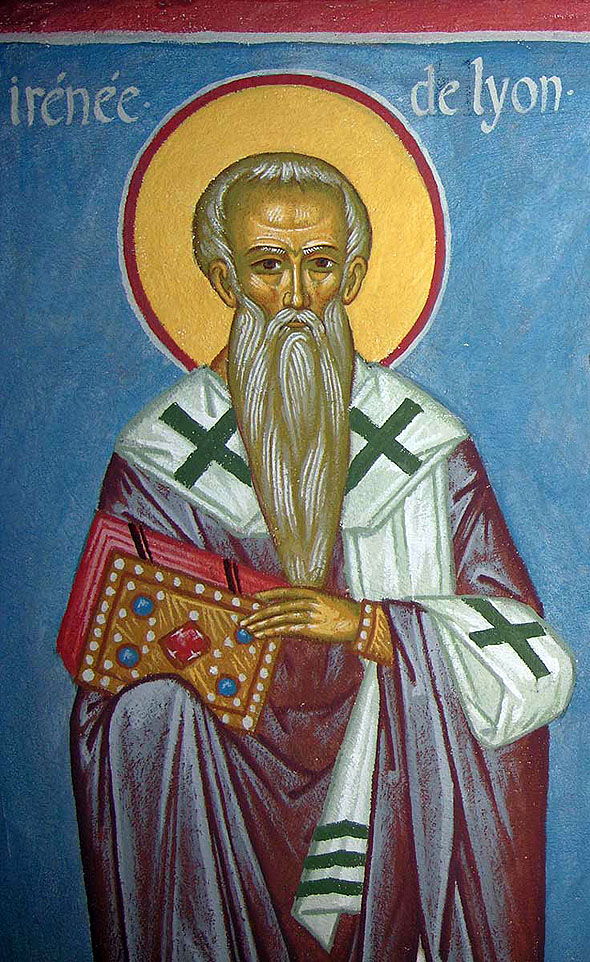
Possibly one of the first fully developed atonement theologies comes the Early Church Father Irenaeus. Irenaeus believed in the recapitulation theory of the cross. Irenaeus saw Jesus as divine God taking on human history when he became a man. Jesus differs from humanity, however, due to his sinless nature. Therefore, Jesus obeyed whereas Adam and humanity disobeyed, and Jesus succeeds whereas Adam and humanity failed. In essence, Jesus exchanged his sinless life with humanity’s sinful life, thus reversing humanity’s fallen history. For Irenaeus, this culminates at the cross. Whereas Adam brought disobedience by eating from the tree, Jesus brought obedience by dying on the tree. The Scriptures would defend Irenaeus’s view. Romans 5:19 says, “For as by the one man’s disobedience the many were made sinners, so by the one man’s obedience the many will be made righteous.” 2 Corinthians 5:17 states, “For our sake he made him to be sin who knew no sin, so that in him we might become the righteousness of God.” Paul would have agreed with Iraenaeus that those who believe in Jesus God declares as righteous as Jesus, for Jesus took on humanity’s sinfulness as a man. Therefore, the recapitulation theory, which Irenaeus first developed, stands in line with the Scriptures, and Christians need to see this important aspect while gazing upon the cross.

Ransom Theory


Shortly after, Origen developed his theory, which would become known as the ransom theory. Origen knew the Bible said Jesus paid a ransom for humanity. Mark 10:45 states, “For even the Son of Man came not to be served but to serve, and to give his life as a ransom for many.” 1 Peter 1:18-19 declares, “knowing that you were ransomed from the futile ways inherited from your forefathers, not with perishable things such as silver or gold, but with the precious blood of Christ, like that of a lamb without blemish or spot.” Origen struggled, however, to understand who Jesus paid this ransom to. For Origen, it did not make sense that Jesus, God the Son, would have to pay ransom to God the Father. It would be as if God paid ransom to himself. Origen concluded the ransom had to be paid to Satan. At the fall, Adam handed over humanity to the devil. If the Lord wanted humanity back, God had to pay with the life of Jesus, just as the devil had expected. Out of his own pride, however, Satan did not expect Jesus to overpower him. Satan could not grasp Jesus, and so Jesus escaped from Satan’s bonds. Therefore, Satan lost everything, both humanity and Jesus.


While Origen receives the credit for developing the theory, ransom theory underwent many revisions during those early years of the church. Gregory of Nyssa positively described ransom theory as divine deception, for the whole ordeal completely fooled Satan. Of his ignorance, Satan did not see Jesus as divine, but instead, Satan saw Jesus as a perfect or near-perfect human because of his righteousness and performance of miracles. Satan wanted Jesus, and he offered God Jesus in exchange for humanity. When Satan received the payment of Jesus, he learned of the divinity of Jesus, which lead to his downhill. Gregory uses a fishing analogy to illustrate his view. The fish believes he receives a free meal by chomping down on the worm, the but hook inside the worm leads to his demise.


John of Damascus liked Gregory of Nyssa’s fishing analogy, but he hated Origen’s belief that Jesus paid the ransom to Satan. Instead, John of Damascus proposed that Jesus did indeed paid the ransom to the God the Father. Ever since Adam sinned against God, God handed humanity over to death. When Jesus died on the cross, and he paid the ransom to the Father and tricked death, which could not hold Jesus and his divine nature. This view understand the Scriptures that Origen focused on, while keeping God sovereign over Satan.

Satisfaction Theory


The Middle Ages brought about a new outlook on the atonement. In the Middle Ages, the people of Europe lived in a feudal system. Lords would let serfs live on and farm the land, and in return, the serfs would pay the lords back with a percentage of the harvest. This rate could fluxuate, depending on how much honor or dishonor the serf gave the lord. If the serf dishonored the lord, the lord would require the serf to pay a higher price, almost too high to afford. Anselm, living in the Middle Ages, saw the cross in light of this context. The sin of humanity brought dishonor to God. Therefore, humanity owes God a payment in order to restore his honor. Indeed, the sinner cannot afford the payment of sin. No amount of righteous acts could undo all the evil that the entire human race had committed. Even the death of the all humanity would not fulfill the payment. Thus, man cannot pay the price, but only God can. The one paying needs to be both God and man. As God, he can make the payment. As human, he represents the party in debt. Since Jesus had both a divine and human nature, only Jesus could pay the price. By dying on the cross, Jesus paid a price he did not have to pay. Because of his love for humanity, he gifted the reward to all who believe him. Anselm, in feudal context, saw Jesus on the cross as propitiation, as described in Romans 3:25-26.

Moral Influence Theory


While a majority of Christians in the Middle Ages held to Anselm’s satisfaction theory, not everyone appreciated as much. Abelard did not like Anselm’s recent satisfaction theory, nor he did like the older ransom theory. Instead, Abelard opted for the moral influence theory. According to Abelard, Jesus came to inspire humanity to love God. Jesus demonstrated how this love should look all throughout his life, but that demonstration of love culminated with his death on the cross. When Abelard looked upon the cross, he did not see a payment for sin, but he saw Jesus display God’s love, which in turn would encourage humanity to love God in return, even it means death. Abelard saw Jesus on the cross as an act of love, just like Paul said in Romans 5:8, “God shows his love for us in that while we were still sinners, Christ died for us.” In turn, Aberland encouraged his listeners to follow Christ’s example, even to death, as Peter commands in 1 Peter 2:21.

Penal Substitution Theory


During the Reformation, the Reformers developed a new theory of the atonement, although it contained many similarities to Anselm’s satisfaction theory. The Reformers disagreed with Anselm on the idea that humanity’s sin brought dishonor to God. In all God’s sovereignty and greatness, nothing could cause God to lose his honor, not even humanity’s sin. Rather, the Reformers laid the foundation of their theory on God’s view of justice. The just God gave humanity the law, defining the difference between holiness and sinfulness. The law reveals God as holy and humanity as sinful. The holy God exercises his wrathful judgment towards sin by punishing sinners with death. Just like Anselm, the Reformers declare the human race as helpless to pay the penalty, but the hope of salvation lies in Jesus. As both God and man, Jesus became the perfect sacrifice. He took on God’s wrathful judgment against sin, so humanity would not have to. He died, so humanity may live eternally. Jesus substituted himself for humanity, taking on the punishment for sin, so humanity would not have to, just as Hebrews 9:6-15 explains.

Christ as Victor Theory


Although its roots began during the period of the early church fathers, Gustaf Aulen made the Christ as Victor, or Christus Victor, popular in the twentieth century. J. Denny Weaver would make it popular again in the twenty-first century with his book The Nonviolent Atonement. As the name hints, this view of the cross centers around the idea of victory. The Fall enslaved humanity to the evil powers of the world, such as the Law, sin, death, Satan and his demons. When Aulen looks upon the cross, he sees Jesus victorious over the Law, sin, death, Satan, demons and all worldly. Aulen reinterprets Irenaeus’s recapitulation theory, Origen’s ransom theory and the Reformers’ penal substitution theory to prove that through history the church has held to the Christ as victor theory. While anyone could easily question Aulen’s reinterpretation of church history, the Scriptures back Aulen’s theology. Colossians 2:15 tells the reader, “ He disarmed the rulers and authorities and put them to open shame, by triumphing over them in him.” Hebrews 2:14-15 informs the reader, “Since therefore the children share in flesh and blood, he himself likewise partook of the same things, that through death he might destroy the one who has the power of death, that is, the devil,  and deliver all those who through fear of death were subject to lifelong slavery.” Indeed, after the cross, Jesus stood victorius.

Healing Theory


Bruce Reichenbach, in the book The Nature of the Atonement: Four Views, offers a fresh, new view of the cross for the twenty-first century. This new view Reichenbach calls the healing view, or the healing theory. Reichenbach uses the whole Bible to develop his theory. First, Reichenbach defines humanity’s fallen nature as a sickness. Reichenbach proves this by showing a consistency between sickness and sin in the Old Testament. Staying in the Old Testament, Reichenbach defends God’s role as healer, and then he shows how God invited the priests into this role of healing with the Levitical law. To wrap up the Old Testament, Reichenbach focuses in on Messianic prophecies that describe the Messiah as a healer removing disease. Turing to the New Testament, Reichenbach turns right to Jesus. He emphasizes the healing miracles of Jesus because he sees those miracles as displaying Jesus as God the healer and the priest aiding in the healing. Therefore, when the Gospel narratives climax at the crucifixion, Reichenbach sees the ultimate healing, the healing of humanity’s sin. Jesus takes on the virus of sin. The virus of sin kills Jesus, but not permanently, for the healer cannot die. Therefore, Jesus cures humanity of sin and brings peace through his healing on the cross.

Conclusion

Christians need to view the atonement as multifaceted, for the Bible views the atonement as multifaceted. In Romans 5:19 and 2 Corinthians 5:21, Paul defines the atonement as recapitulation, for on the cross Jesus exchanges places with humanity. Humanity becomes pefect and Jesus becomes sin, taking the punishment for sin. In Mark 10:45 and 1 Peter 1:18-19, both Mark and Peter call Jesus on the cross as paying the ransom so the slaves of sin may become the slaves of Christ. In Romans 3:25-26 and 1 John 2:2, both Paul and John label the cross as propitiation, satisfying the dishonor humanity’s sin brought upon God. In Romans 5:8 and 1 Peter 2:20-21, both Paul and Peter see the cross as moral influence, for Jesus becomes an example of love and obedience, even unto suffering and death. From reading Hebrew 6:9-15, the first century Christians would have called the cross penal substitution, for they would have seen Jesus become the perfect sacrifice to pay God’s wrathful judgment towards sin, just like the sacrifices in Leviticus did. From reading Colossians 2:15 and Hebrews 2:14-15, Paul and other Christians of the first would have gazed up on the cross and acknowledged Jesus as victorious over sin, death, Satan and all the evil powers of the world. Since the Bible talks about all these views, Christians can conclude that the Bible sees the atonement as multifaceted.


Not only did first century church hold all these theologies of atonement, but the church continued to hold these theologies throughout history, sometimes emphasizing one point over another. During the centuries of the early church fathers, Irenaeus saw the atonement as recapitulation. During that same time period, Origen, Gregory of Nyssa and John of Damascus looked up the atonement as payment of a ransom. When the Middle Ages came, Anselm emphasized the satisfaction theory because focused on the wrongdoing on humanity’s sin on God’s honor, whereas Abelard emphasized the moral influence theory because he focused in on God’s love. The Reformers at the time of the Reformation drew towards the idea of humanity’s sin as the object of a holy God’s wrath, so they developed the penal substitution theory. When the twentieth and twenty-first century arrived, Christians wanted to think less of violence and more on overcoming worldly powers, so Gustaf Aulen and J. Denny Weaver reminded the church that the atonement displays Christ as the victor of those evil, worldly powers. At some point in time in history, the church has held at least one of these views, if not more. Therefore, history provides a testimony of the importance of each facet. Some Christians in the church talk about returning the good days of the first century church. While this belief lacks respect for church history, it would be helpful for the church when it comes its theology of the atonement, for it will gives the church a more complete picture of the atonement.

Sunday, December 21, 2014

My Top 4 Favorite Christmas Songs

Last Christmas season, I spent many Facebook statuses trashing bad Christmas carols. Needless to say, it didn't go over too well. I got many negative comments. This Christmas season, I decided to be more positive. Every Advent Sunday, I posted a good Christmas song that really captures the true meaning of Christmas. After the 4 Advent Sundays, I posted my top 4 favorite Christmas songs. So I thought on this last Advent Sunday, I would post all 4 favorite Christmas songs in one blog. So, without further ado, my top 4 favorite Christmas songs.

4. "Lived the Day You Died"

This song comes from that Christian parody band, the ApologetiX.   This song is a parody of "Love the Way You Lie" by Eminem feat. Rihanna. ApologetiX has really redeemed this song about an abusive relationship. J. Jackson takes the little detail of the Christmas story of the wise men bringing baby Jesus myrrh, and he expounds on it, on how it plays in Christ's redemptive plan. It reminds the listener that the Christmas story is not segregated from the Easter story, but has an important role contributing to it.

(I put the master recording first because it's easier to hear and understand, but the live version has better female vocals, no offense to Jana Jackson, so I put that second)


3. "Boy Like Me"

"Boy Like Me" comes from the Singing Christmas Tree album from VeggieTales. I came across this album when Amazon had it as a free download a few years ago. I have never heard the doctrine of the humanity of Jesus sung in a song that well written in both terms of music and lyrics. And from children's Christmas music nonetheless!


2. "Mary Did You Know?"

This song just ask the questions that everyone wonders. How much did Mary understand about the boy she was giving birth to? This song also does a good job of combining the deity and humanity of Jesus.


1. "Hark! The Herald Angels Sing"

 No, it's not my favorite because it's at the end of the Charlie Brown Christmas special. Charles Wesley, composer of both music and lyrics, made sure all the music he wrote was theologically sound (pun somewhat intended). This song is full of theology. It reminds the Christian that the birth is to get the Christian in focus on God's redemptive plan through ...Christ's ministry. Jesus was born so that "God and sinners reconciled." Jesus was "Born to raise the sons of earth, born to give second birth." It also teaches Christians that Jesus is both God and man. "Veiled in flesh, the Godhead see..." Like I said, so much theology in such a short song. This song, equips, edifies, encourages, teaches and worships. It does so much.

Oh, what the heck, let's play the Charlie Brown Christmas version for good measure.


Merry Christmas everyone! :)

Thursday, December 18, 2014

The Really Real Jesus

Introduction

A few years ago, I came across a discussion between teens and college-aged young adults, doubting if the Pilgrims arrived in Plymouth, Massachusetts on the Mayflower in 1620. At first thought, this conversation might provoke someone to shake his or her head, thinking how stupid this generation is for not believing a historical event important to the American nation. After further thought, however, no one can really blame this generation for questioning history. College students today, when they went through elementary school, heard a story of George Washington cutting down a cherry tree and then reporting to his father, “I cannot tell a lie. I cut down the cherry tree. In reality, this story never happened. This story circulated when George Washington sat in as President of the United States, in order to teach early Americans that George Washington always spoke the truth in honesty. In elementary school, students learn that Cristopher Columbus discovered America in 1492. Then, in high school, the same students learn the Leif Ericson discovered American about 500 years earlier, and more closely to what we know as [the United States of] America (Leif Ericson landed in present-day Newfoundland; Cristopher Columbus landed in the present-day Caribbean island of Hispanola). No wonder this generation doubts history so much! And that’s history that only happened a few centuries ago. How much more ancient history, where the ancient historians rarely differed between their history and religious myths. For example, the Trojan War really happened between the Spartans and Trojans, but the Iliad records the Trojan War had Greek gods and goddesses appearing to heroes on both sides. A teen or young adult reading the Iliad could doubt the Trojan War happened because Homer mentions Greek gods and goddesses involved in the war.

For if anyone wants to disprove the ancient Greek polytheism, all a person would have to do is take a hike up to Mount Olympus. When that person reaches the summit of Mount Olympus and observes no gods or goddesses there, he or she can easily conclude the Greek gods and goddesses do not exist. If the Greek gods and goddesses do not exist, then anyone can easily conclude that all the Greek myths, like the Iliad (even Greek history, like the Trojan War!), that have the Greek gods and goddesses in them cannot be trusted as historically accurate. Ancient religions, like the ancient Greek polytheism, has turned many people into atheists. Their atheism, which makes people believe God does not exist, makes people believe that any ancient writing mentioning a God must not be historically credible. Going further, if any of those ancient writings calls a person a God, both the writing and the person cannot be considered historically credible. In terms of Christianity, some atheists concludes that since God does not exist, Jesus does not exist, and if the Bible mentions Jesus existed as both God and man, they don’t take the Bible seriously as history. The atheist’s prejudices and presuppositions has led him or her astray. Jesus did exist outside the Bible, for many first century people, including hostile opponents, referenced Jesus. Even if the atheist admits Jesus existed, as some do, they state the Bible does not accurately record who Jesus is or what Jesus did. Therefore, the Christian cannot quit at proving Jesus existed in history. The Christian must insist that Jesus lived just as the Gospels record. This paper will not only prove Jesus existed, as the historical records demonstrate, but also that the Gospels accurately recorded the historical Jesus, using archaeology and the testimony of the early church fathers.

Background of the Need

Throughout history, especially recent history, everyone from atheists to so-called “intellectuals” have doubted if Jesus existed. If they do say Jesus existed, either willingly or reluctantly, they question if the Gospels historically record Jesus as he lived in the first century. The most recent and most famous is the Jesus Seminar. Consisting of Robert Funk and thirty of his friends, the Jesus Seminary sought to sort out the non-fiction Jesus and the fiction Jesus from the four canonical Gospels and the pseudapigraphal Gospel of Thomas. The members of the Jesus Seminar voted on the sayings of Jesus using four colored beads. Red meant Jesus definitely said it or something close to it. Pink represented Jesus probably said it, or said a somewhat similar idea, but multiple transmissions have left a little room for questioning it. Gray denoted that Jesus probably didn’t say it, but maybe it roughly represents an idea Jesus had. Black signified that Jesus never said, but rather the church sometime in history inserted that interpretation about Jesus. When all voting finished, only sixteen percent of events, seventeen percent of parables, and eighteen percent of the sayings of Jesus got the red bead vote to acknowledge them as historically accurate. The Jesus Seminar denied all of Gospels’ miracles, from the virgin birth to the resurrection. When the Jesus Seminary completed, they turned Jesus into a smart teacher and a social revolutionists, and nothing more. Therefore, Christians need apologetics that defend both Jesus as a real person in history and the Gospels as real historical accounts of the real Jesus.

Historical Records

Atheism denies the existence of God, but some atheists go even further and boldly proclaim that Jesus never existed either. Those atheists claim that only the New Testament mentions Jesus, and therefore they quickly conclude that Jesus never existed outside the imagination of the apostles. Such atheists, however, have concluded too quickly, and thus have concluded falsely, for historical records outside the Bible speak of Jesus.

Suetonius

Roman historians wrote about Jesus. Suetonius Tranquillus, an upper class lawyer, wrote a history of twelve Roman emperors after viewing the Roman archives of the emperors. Upon writing about Emperor Claudius, Suetonius records that Claudius removed the Jews from Rome. Suetonius says that Claudius removed the Jews because of their riots due to “the instigation of Chestus.” Christian scholars have good reason to believe that Chestus is a scribal error for Christ. Despite several records carefully recording the name of every Jew in Rome, not a single record writes down a Chestus in Rome. If Chestus did exist as a slave, as some skeptics have suggested, a good Roman historian, like Suetonius, would have provided some kind of biographical sketch explaining the minor character’s importance. No such biographical sketch exists, suggesting every commoner knew about the character. The error probably comes from the term Chrestiani, a profane name Romans gave Christians, including Suetonius. In fact, when Suetonius uses profanity in regards to Christians in an official historical recording, Suetonius displays his disdain towards Christians. Suetonius further demonstrates his hatred towards Christians when he later records that Christians follow an imaginary myth that causes misbehavior. Therefore, the Christian can conclude that Suetonius believed Jesus existed, for Suetonius blames the work of Jesus for upheaval between Jews and Christians in Rome.

Tacticus

In his final work, Roman senator and historian Cornelius Tacticus records Roman history from the fourteenth century A.D. to the sixty-eighth. Tacticus highlights the burning of Rome as an important event in Roman history. Tacticus records Nero started the fire, but blamed Christians as the cause. Tacticus then briefly describes Christians. He explains that Christians followed a Jesus of Nazareth, whom they called the Christ, who got executed by Pontius Pilate. Tacticus also looks down on Christians, for he calls them a people “hated for their abominable crimes” and later calls them “hateful of humanity.” Yet Tacticus too acknowledges Jesus. He calls Jesus a Christ, fully knowing the implications of the title. He recognizes Jesus as the founder of the movement the apostles expounded, commonly known as Christianity. He verifies for the Christian that Pontius Pilate had Jesus crucified. Furthermore, by mentioning Pontius Pilate, who many Roman historians mention, Tacticus puts Jesus in real history. Therefore, the Christian can conclude Tacticus knew Jesus existed, too.

Pliny the Younger

As a Roman senator and governor, Pliny the Younger took the time to investigate Christians in order to know how to deal with them. Pliny even went as far as sending out spies to spy on Christians to learn more about them. In a letter to Trajan, Pliny reports that the Christians recite a creed stating Jesus as Christ and God. Once again, Pliny recognizes the start of the Christian movement that had reached Rome. The movement started with Jesus. Pliny records a style of worship similar to that in Acts. Pliny even goes further and mentions that Christian worship included reciting a creed, declaring Jesus as God. He goes on to say their reverence for Christ as God does not allow them to worship another as God. In conclusion, Pliny not only recognized Jesus as real, but also recognized that some saw Jesus as God. Like Suetonius and Tacticus, Pliny stands as an enemy of Christianity, for he too declares the religion nothing more than a crazy superstition. Not even Pliny’s hostility towards Christianity could prevent him from denying the existence of Jesus.

Josephus

Not only did Roman historians record Jesus in history, but a Jewish historian did as well. Jewish historian Josephus speaks about Jesus in many of his works. Of all the works of Josephus, Testamonium Flavium and Antiquities talks the most about Jesus. The most famous passage comes from Testamonium Flavium. Even subtracting the material that has come into question, Joseph makes bold statements for a Jewish devotee. First, Josephus calls Jesus wise, and he also notes that other people knew Jesus as a wise man. Second, Josephus says Jesus does “surprising works,” possibly nodding at the miracles as supernatural acts. Third, Josephus states that Jesus faced opposition from Jewish leadership and Pontius. Fourth, Josephus confirms Jesus died on the cross at Pilate’s command. Fifth, although Josephus may not have believed it himself, he records the Christians believe Jesus rose from the dead, which led Christians to believe Jesus must be the Messiah. Josephus didn’t just believe Jesus existed, Joseph believed most of the Gospel claims as well.

Josephus mentions Jesus in Antiquities of the Jews, although indirectly. Antiquities of the Jews concludes with the close of Festus’s reign and Annas’s rule in the Sanhedrin. When Festus dies, Annas makes a power grab and starts making executive decisions. In one decision, Annas has James, “the brother of Jesus called Christ,” arrested, along with “certain others.” The certain others probably refers to Christians. To specify a common name such as James, Josephus identifies him as the brother of the Jesus. To specify a common name such as Jesus, Josephus identifies him as Jesus known as Christ. This name and title makes it clear that the original reader could have known about Jesus.

Rabbis

Not only did Jewish historians record Jesus in history, but Jewish rabbis did as well. Two of the most explicit mentions come from the transcripts of the Sanhedrin. These transcripts do more than just acknowledge Jesus existed. They acknowledge Jesus received the death penalty, and the time table matches the one found in the Gospels. Later on in the text, a rabbi declares Jesus practiced magic. This rabbi asserts he saw something supernatural happen, even if he does not call it a divine miracle. Although all the writings criticize and condemn Jesus, they prove Jesus existed nonetheless.

Archaeological Records

Previously, we have explored records and other writings in history that mention a Jesus of Nazareth, whom Christians believed to be the Messiah. Next, this paper will look at the Gospels as historically accurate. Before this paper can look at the Gospels, however, this paper needs to look at the archaeological record. The archaeological will not have any explicit mentions of Jesus by name. Rather, the archaeology will display the history, culture and geography of the first century Israel. In turn, when the Gospels display the same history, culture and geography, the reader can rest assured that the Gospel authors recorded the Gospels as accurate to history.

Coins

In Mark 12:13-17, the Pharisees and Herodians try to trap Jesus with a question about taxes. In this story, Jesus asks for a coin, and then he asks whose inscription is on the coin. They reply Caesar’s. Indeed, archaeology has revealed coins had Caesar’s name stamped on them. In fact, Caesars would use the coins to spread propaganda about themselves. Coin inscriptions would not only have the Caesar’s name, but also a title such as “Son of God” or “Son of a Divine one.” Such titles would remind the citizens that the previous Caesar, the current Caesar’s father, had reached a place among the gods, which verifies the current Caesar as the legitimate Caesar of Rome. Sometimes, if a Caesar pushed to make himself deity before death, he would change the coin inscription to something like “the holy one” or “the revered one.” Caesar Augustus, the emperor during the time of Jesus, had made this change by the time Jesus entered the ministry. Not only does Jesus reference this change in the Gospel of Mark, he might use it to make the Herodians, a political party supporting the Romans, to decide who is God: Jesus or Caesar.

Calendar

Another key inscription comes from a calendar found in Priene, a city located in western Asia Minor. The calendar made the birthday Caesar Augustus the new beginning to the year. The calendar writes that the Caesar’s birth is good news and that people should celebrate with good tidings toward each other. Both terms “good news” and “good tidings” comes the Greek word euanggelia, or gospel. What makes the Caesar’s birthday gospel, or good news, is that a god comes down to earth in human form. The inscription of the word gospel on the Roman calendar helps the Christian understand the use and importance of the word gospel in the four Gospels. Mark roughly borrows this Priene calendar inscription for the start of his Gospel. In Mark 1:1, Mark boldly proclaims that Caesar’s birth does not begin the good news, but rather the ministry of Jesus begins the good news. Altogether, the Romans used the idea of gospel just as much as the Christians living in the Roman Empire.

Urbanization of Galilee

Archaeology reveals that, during the ministry of Jesus, Herod Antipas, the tetrarch of Galilee, began building more in Galilee to make rural Galilee more urban. Antipas started by building two cities. One he named Sepphoris, and the other he named Tiberias. These two cities attracted many rural Galileans into city life, as well attracting many other people from faraway lands. With more people in the land, the demand for food and housing went up. In order to pay for food and housing, people would go into debt and have to work off their debt as tenants working in a farmer’s field. Jesus knew his currents events. Therefore, he taught lessons in Galilee that many Galileans could relate to. Such teachings consist of the parable of the wicked servant, the parable of the workers in the vineyard and the parable of the tenants. All these parables accurately describe life as a tenant farmer in first century Galilee.

Gospel Record

So far, we have explored records and other writings in history that mention a Jesus of Nazareth, whom Christians believed to be the Messiah. Most of these writings come from opponents of Jesus and opponents of Christianity. If Jesus didn’t exist, those opponents would have called the Christians out for believing in an imaginary person. Since these opponents take the time to refute Jesus, he must exist. Christians can use these writings to prove that Jesus existed to atheists. These accounts, however, can only get the Christian to prove Jesus existed. This leaves people to make any claim about Jesus they please. The Christian should not stop at proving the existence of Jesus. If the Christian believes the Bible is the inspired Word of God, then Jesus needs to be real like the Bible says. The Gospels writers took the time to record the words and actions of Jesus just as he lived them. Even as early as the church fathers, they could see the Gospels as historically accurate.

Four Distant Gospel Authors

Due to increased persecution in the 40s A.D., the apostles, including all four Gospel authors, split into four main mission groups to spread the Gospel. Paul and Luke most likely ministered to Greeks in Greece, as all Paul’s epistles hint. John most likely ministered in Asia Minor, as his seven letters in Revelation hints. Peter and Mark probably ministered together to the Romans in Rome. James and Matthew probably ministered to the Jews, wherever they were scattered. Looking at a map, the four Gospel authors wrote their Gospel accounts very far apart from each other, in both distance and time. This means they almost certainly did not collaborate with each other. Still, their stories concur with each other. Therefore, the reader can conclude these stories accurately account what Jesus did on this earth.

Against the Expectations

Some skeptical of the Gospels’ historical accuracy hypothesize the Gospel authors fictionalized Jesus in order to make him the Messiah. If the Gospel writers did fictionalize Jesus to make him the Christ, they did a terrible job. The first century Jews, including the Jewish Gospel writers Matthew, Mark and John, had expectations of the Messiah totally different to the character of Jesus. Still Matthew, Mark and John wrote down that contrary character Jesus displayed instead of writing down their dream Messiah. If the Gospel authors wanted their ideal Messiah, they would showed Jesus as a prophet who agreed with all the respected Pharisees’ and Sadducees’ religious teachings. Instead, they showed Jesus constantly in conflict with the Pharisees’ and Sadducees’ legalistic interpretation of the Law. If the Gospel writers wanted their model Christ, Jesus would heavily support a sovereign Israel and would fight Rome like Joshua fighting the Canaanites. Instead, Jesus never causes Rome any problems. In fact, he even helps a Roman centurion. The Gospel authors could have chosen to fictionalize Jesus to prove to Jews Jesus was truly the Messiah. Instead, they chose to accurately record Jesus as he lived in history, even if it meant losing Jewish followers.

Early Church Fathers

The early church fathers quickly accepted the books of Matthew, Mark, Luke and John as historically accurate accounts of the life of Jesus. The early church fathers had these four Gospels circulated throughout the whole Roman Empire. They quoted them freely in their letters. For example, Clement quotes all three synoptic Gospels in a letter to Corinth. Irenaeus writes that Polycarp, a disciple of John, read and quoted the Gospel of John constantly. When the early church fathers came together to write the creeds of the faith, they heavily relied on the four Gospels. When the creeds record that Pontius Pilate crucified Jesus, they align the crucifixion with history. Upon observing Christians, Pliny writes that the Christians read and recite the Gospels every Sunday. If the Christians read and recite the Gospels, they had to believe them to be true, including Jesus living. Justin the Martyr also observes Christians coming together to read a creed in his First Apology. Justin even writes down some of this creed. The creed not only records Jesus crucified during the time of Pontius Pilate, but also during Tiberius Caesar. All the early church fathers clearly conclude Jesus did exist as a real man in history, just as the four Gospels accurately record.

The Gnostic Gospels

The Gnostic gospels might sound like an odd choice to defend the historicity of the four true Gospels, but comparing the two, the Gnostic gospels reveal themselves to be fiction and the four true Gospels to be historical. The Gospel of Truth, written by the Gnostic Valentinus, does not record any action of Jesus, so it cannot be taken as historically true. The same goes for the Gospel of Thomas. The Gospel of Thomas does not have any narrative. While The Gospel of Thomas has several sayings that anyone can find in the other four canonical Gospels, it also contains saying heretical compared to the other Gospels. All this evidence adds up to a false Gospel. The Unknown Gospel, written in the second century, while free of heresy, consists of a compilation of verses from the other four canonical Gospels. This so-called gospel is merely a harmony of the true Gospels, furthermore attesting to the four Gospels historical accuracy. Same goes for the Gospel of Peter. The Gospel of Peter’s source comes from the three synoptic Gospels. Again, this attests to how the people of second century already saw the synoptic Gospels as historically accurate. The early church fathers quickly and easily rejected these Gnostic Gospels because they knew they were not historically credible. They knew they needed a historical account of the man Jesus, so that’s why they went with the historical Gospels of Matthew, Mark, Luke and John over the Gnostic Gospels.

Conclusion
 
Jesus did exist in history. Romans historians such as Suetonius, Tacticus and Pliny the Younger wrote about Jesus. Jewish historian Josephus wrote about Jesus. None of these historians would have sacrificed their credibility as historians for a fictional character, especially a fictional character whom they despised, as well as despising his followers. Jewish rabbis talk about Jesus in the Talmud. If Jesus wouldn’t have existed, they would have wrote down that in order to silence the new Christianity for falsely proclaiming a Messiah. Instead of denying his existence, they denied his words and deeds. Furthermore, Jesus existed in history exactly as the Gospels record it. They early church fathers immediately agreed with the testimony of these books, and they even supplemented it with more history. At the same time, the early church fathers quickly rejected the Gnostic gospels because they knew those books did not agree with Jesus either historically or theologically. All the Gospels match up with the exact same history and culture modern-day archaeology has revealed. The Gospel authors could not have collaborated their Gospels into pieces of fictions. They lived too far apart to collaborate. If they did collaborate, they did a horrible job, for they created a Messiah totally contrasting what the Jews declared the Messiah would be. Therefore, the Gospels must then accurate record the real, historical Jesus. If the atheists still wants to consider themselves intellectual, they must stop denying the existence of Jesus, as stated in the Gospels, for they are not doing themselves any favors.


Thursday, March 29, 2012

John: A Story About The Son of God

Sometimes when Christians zoom in and focus on one verse, they lose the context of the chapter, or even the paragraph the verse is in. Sometimes when Christians zoom in and focus on one chapter, they lose the context of the whole book. I know through my studies of John that when we focused on one chapter of John, it might be easy only think about what that chapter is saying and not even consider the context of the whole book of John. It would be a shame if we did that because most likely that chapter contributes the book’s overall message, and if we don’t think about the book’s overall message, we might very well miss the true meaning of the chapter. I close my devotional commentary on John by stepping back, zooming out, and looking at the whole picture of John. I’ll start by reviewing the introductory material to John, then we’ll outline John, and from that we’ll pull out theological pictures, themes and messages.

Before we go any further, I will put a disclaimer by saying that this will be nothing like my devotional commentary on Mark. Mark is not like John. Mark is an epic story; John is not. Let me be clear on what I am saying. Yes, John is a story, in the sense it is written in narrative form. I believe John does this in order to demonstrate what he is writing is historical truth (history in the 1st century was written like a story). But as I will remind you in the introductory review, John is a supplemental Gospel. And just like the supplemental appendixes to any book, both fictional and non-fictional books, the supplemental appendixes are not meant to tell a good story, but are meant to give extra information to help the reader understand the book’s concepts further. That is what John is trying to do. He’s not trying to tell a good story to get the reader to come to faith. Instead, John is trying to give extra information about the history of Jesus to persuade the reader to come to faith (or continue faith). So think of John less as a story, and more like a persuasive essay. That will also help with the introductory material.

Speaking of introductory material, let’s move on to the introductory material. Now I’m not going to spend time defending all of it. If you want a defense of all these, go back to “John 0: An Introduction” where we talked about this. If you don’t want to read it [again], just accept what I have said as truth. Remember, the introductory information is what reporters seek when asking questions. This is the who, whom, what, where, when, why, and how. To be more specific, the answers to these question will be the author, the audience, the historical occasion, the location, the date, the purpose and the structure.

THE AUTHOR (WHO): John
THE AUDIENCE (WHOM): Christians
THE LOCATION (WHERE): Written in Ephesus, Takes Place Mostly in Judea
THE DATE (WHEN): 85-95 AD
THE HISTORICAL OCCASION (WHAT): Gnosticism and other pseudo-Christianity cults were preaching that Jesus was only a man, and wasn’t God.
THE PURPOSE (WHY): John wrote the book of John to persuade Christians to continue believing Jesus is the Christ, the Son of God.
THE STRUCTURE (HOW): A Supplemental Gospel

Now if you remember my explanation on the structure (how), I told you that it could both/either the writing style and/or method, or it can be an outline. In my review of the introductory material, I simply told you the writing style. The Gospel of John is a supplemental Gospel. But I do also want to outline the book for you. At Bible College, I was taught that a good start to outlining a Bible Book is to first write sentence summaries on the paragraphs, and then group the similar paragraphs together. But I don’t have the time to write paragraph summaries, and you probably don’t have the time to read paragraph summaries. So for simplicity’s sake, I am going to write a sentence summary for each chapter. Then we will combine similar chapter summaries together to draw up an outline. Below are the sentence summaries. The bullet number is the chapter number. Also, I will sometimes “cheat” on the sentence summaries. If I cannot write a one-sentence summary without making a ridiculously long run-on, I will make it two or three sentences.

1. Jesus is God because He was with God at the beginning, He created the universe and He gives life. Then 5 men testify Jesus is God: John the Baptist, John the Disciple, Andrew, Philip and Nathanael
2. Christ’s disciples believe Jesus is the Christ and Son of God through His first miracle of turning water to wine and through the cleansing of the temple.
3. Nicodemus moves from the darkness of sin to the True Light, Jesus Christ, because Nicodemus believes in Jesus as the Son of God.
4. Jesus evangelizes the Gospel as Living Water to the Samaritan Woman at the well, and she believes that Jesus is the Christ and the Son of God.
5. Jesus points out 4 testimonies that demonstrate Jesus is God the Son: God the Father, John the Baptist, Old Testament Scriptures, miracles/miraculous signs
6. Jesus demonstrates that He is the Bread of Life, an “I AM” statement, by Feeding over 5,000 people. Many followers turn away from Jesus because they cannot accept his hard teachings, but the disciples stick with Jesus because they believe Jesus is the Holy God.
7. The people are skeptic about Jesus, split between either “a good teacher” or “a deceiver,” but few will commit to Jesus as the Son of God. Jesus calls the people to a stronger faith, one that recognizes Jesus as the Christ and/or the Son of God.
8. Jesus demonstrates He is God because uses 2 “I AM” statements, which link back to God’s name, Yahweh, or “I AM WHO I AM.”
9. Jesus demonstrates that He is the Light of the World, an “I AM” statement, by giving light to a blind man. The miracle shows that those who are in sin are in darkness because they do not have the Light of the World.
10. Jesus teaches that He is the good shepherd, an “I AM” statement, and a biblical allusion to God that all the Jewish people will recognize, thanks to Psalm 23.
11. Jesus demonstrates that He is the Resurrection and the Life, an “I AM” statement, by raising Lazarus from the dead.
12. As Jesus enters Jerusalem, the Jewish form a parade and declare that Jesus is the Son of David and the King of Israel, titles only for the Messiah. John shows the reader Scripture foretelling of this event, further proof that Jesus is the Christ.
13. Christ’s betrayer is identified, and this further proves Jesus is the Messiah because Old Testament Scriptures, such as Psalm 41:9, foretell of the Messiah having a betrayer.
14. Jesus demonstrates He is God by teaching He is the only way to the father, as well as the only way to even see the Father, using an “I AM” statement. Jesus also displays Himself as the God the Son by depicting the Trinity, with the Father, Son and Holy Spirit.
15. Jesus demonstrates that He is God by teaching that He is the Vine (an “I AM” statement), the Father is the Gardener, and the Christians are the branches.
16. Jesus is shown as God the Son because He sends God the Holy Spirit from God the Father.
17. Jesus is displayed as the Son of God because He calls God His Father in an intimate way.
18. Jesus shows that He is in control of the Jewish trials because God is the one who gives the Jewish leaders the authority they are in.
19. Jesus shows that He is in control because He explains to Pilate that the only reason why Pilate is in charge is because God gave him authority. Jesus also is seen as the Christ because He fulfills prophecy and serves as Penal Substitution for sin.
20. Jesus rises from the dead, and His disciples and followers go from calling Jesus “Rabbi” and “Teacher” to “Lord” and “God.” For the disciples, the resurrection was the ultimate sign Jesus was the Messiah and Son of God.
21. The large catch of large fish is a post-resurrection miracle that further proves to the disciples that Jesus is the Lord God.

Alright, the next step is to group them together into similar themes or similar messages. Now I was taught a good outlines has neither too many points nor too few points, or a good outline has neither too many section or too few sections. This became a problem for because of the latter. Every time I tried to outline it, I ended up shoving a bunch of chapters into a single section. But I tried to look past this. I didn’t want a hermeneutical rule to be stronger than good theology. Maybe if the theology is good, it doesn’t matter if the hermeneutical rule is broken. So the first one I tried was to group was by Christ’s “life stages,” or by time. Once again, the bullet numbers are the chapter numbers.

Outlined by the Life of Christ
1-10. The Ministry of the Christ (3-4 years)
11. Transition from the Ministry to the Passion (1-2 days)
12-21. The Passion of the Christ (1 week)

This outline has many strengths, of because of the many strengths, this one is the one I like the most, despite its shortcomings. One of its biggest strengths is that it cuts the Gospel of John in half, and the halfway point is the perfect transition. Another good sign of an outline is that it is no lop-sided, and this outline definitely does not lop-side the Gospel of John. The Ministry of the Christ is 10 chapters long. The Passion of the Christ is 10 chapters longs. That one chapter that serves as the halfway marker is the Resurrection of Lazarus. The Resurrection of Lazarus is part of The Ministry of Christ because He is serving people to bring them to believe in Him. The Resurrection of Lazarus also is part of The Passion of the Christ because it foreshows that Jesus will die and be raised up. Another reason I like this outline is because you could rename the section titles, and they would still contain the same chapters. For example, you could name the outline “Outlined by Location.” Chapters 1-10 would be labeled “Israel” because Jesus ministers in Judea, Samaria and Galilee. Chapter 11 would be labeled “Perea” because the Resurrection of Lazarus takes place in Perea. Chapters 12-21 would be labeled “Jerusalem” because all 10 chapters (for the most part) take place in Jerusalem only. Another example would be renaming the outline “Outlined by Time” Chapters 1-10 is “The Years,” Chapter 11 is “Day,” Chapter 12-21 is “week.” A third reason I like this outline is that all the sections are consistant with John’s purpose. All the sections portray Jesus as the Christ and the Son of God. What are the problems with this outline? Like I said above, it bunches too many chapters into one section. 10 chapters for one section is a lot, especially for a book with 21 chapters. On a similar note, 1 chapter is too small for a section, especially if the other 2 sections have ten chapters. Speaking of an unbalance, another fault is the time is unbalanced. There’s not a good balance if you go from years, to days, to weeks. If you were to go back the “location outline,” the balance within “Israel” and “Jerusalem” is not good either. Only once does Jesus go to Samaria in “Israel.” And a couple times in “Jerusalem” Jesus is outside of Jerusalem, like in Bethany or by the Sea of Galilee. But I still feel like this is nit-picky, and next to the pros of the outline, the cons seem like nothing.

Still, I tried to think up of a way outline this Gospel in another way. On one hand, if my biggest problem with the first outline was that the sections were too big, I had to figure out a way to make the sections smaller. On the other hand, if one of the things I liked about the previous outline was the transition in chapter 11, so I had to figure out a way to keep it. The best way I could think of keeping the transition was to think up another transition similar to the one in chapter 11. In order to do this, I looked at different interpretations and different lessons learned from John 11. By doing so, I came up with an outline that outlines the Gospel Book by the numbers of followers Jesus had. I came up with this.

Outline by Number of Followers
1-5. Thousands of followers (5,000+)
6. Transition from thousands of followers (5,000+) to tens of followers (70-90)
7-10. Tens of followers (70-90)
11. Transition from tens of followers (70-90) to hundreds of followers (100-600)
12-21. Hundreds of followers (100-600)

This outline does need a bit more explaining. As you can guess, one way I looked at story of the Resurrection of Lazarus was at the great increase of followers. That immediately reminded me of another great change of numbers when it came to Christ’s followers. It wasn’t an increase, but a decrease. In chapter 6, many followers leave because they cannot accept Christ’s hard teachings. So I tried to see this as 2 transitions. While the generic titles of sections, such as “tens,” hundreds,” and “thousands” do not need great explaining, maybe the more specific numbers do. But before I explain them, let me say these are rough estimates, which means they were rounded. The “thousands” number of “5,000+” I got from the Feeding of the 5,000, obviously. I chose “70-90” for the tens because we know at this point in the Life of Christ Jesus sends out 72 disciples to minister to the people (see Luke 10) but it can’t be in the hundreds. For the “hundreds” I chose “100-600” because we know Jesus appeared to over 500 believers after the resurrection (see 1 Corinthians 15) but we also know there are only 120 in Jerusalem during Pentecost (see Acts 2). This outline has strengths. First, it gives us more sections. We went from 3 sections to 5 sections. Second, it gives us a better spread of chapters…well, at least better than the last outline. Yet each strength of this outlines has weaknesses, and then some more. First, while it gives us more sections, it doesn’t give us too many more sections. 3 sections to 5 sections is not a big change. On that note, the sections don’t exactly divide the material better. For starters, it only gets rid of one of the big sections of 10 chapters, but it also leaves the other big section of 10 chapters. Next, the chapter divisions are far from even. If written out, the chapter divisions would be 5-1-4-1-10. Even without the transition chapters, it’s 5-4-10. These are far from even. At least the last outline was closer to even. As I argued with chapter 11 above, chapter 6 alone is not good enough to be its own section, even if it is 70 verses long. As I stated with one of the negatives with the last outline, these titles don’t fully do a good. In chapter 1, Jesus only has 5-6 followers. In the first half of chapter 2, Jesus has 5-13 followers. Chapter 1 and half of chapter 2 is far from thousands of followers. My last argument against it would be the theology behind it. Did Jesus ever measure His ministry’s success by number of followers? Far from it. It would seem like more often Jesus called His followers to be more sincere and serious about their faith, even if it mean losing several followers. If Jesus didn’t measure His ministry by His followers, then neither shall we.

Running out of ideas, I “cheated” and I turned to commentaries. And I do use the term “cheated” loosely. Whether that was “cheating” or not in Bible College varied among your professors. Some professors did call it cheating because they claimed that you should be able to outline it yourself by just reading it, and you shouldn’t need any help, especially from commentaries. Other professors say that it’s not cheating, but proper research. In fact, you should check commentaries to see if you are right or not. Coincidentally, these professors were the professors who would cut and paste the commentaries’ outlines in their PowerPoint when teaching. Well, I am going to side with the other professors and look at what a couple commentaries say.

The first commentary I want to look at is The Bible Reader’s Companion. The reason I am showing you this is not because it’s a good outline, or at least it’s not the best outline, but because it does kind of verify my first outline. Now because it is very similar to my outline, it’s going to have the same weaknesses as my first outline, the biggest one would being the sections are too big (also note that I am only going to show you the main points, not the subpoints). But at the same time, it has the same strengths. So let’s take a look at it.

The Bible Reader’s Companion Outline
1-12. Public Ministry
13-21. Private Ministry

From the start you can see the problems I had with this outline. There’s not enough sections. Because there is not enough sections, there are too many chapters within a section. Yet it works. The first 12 chapters of John all show the Public Ministry of Jesus. In those chapters, Jesus is seen multiple times teaching to large crowds. All his teachings and miracles are done in a public place where everyone can see, like a synagogue or a temple (see John 18:20,21). The last 9 chapters, chapters 13 to 21, show the Private Ministry of Christ. Remember that John 13-17 is all behind the close doors of the Upper Room where the Last Supper takes place. Most of John 18 and John 19 is Jesus privately talking to his accusers, both the Jewish accusers and the Roman accusers. In the last 2 chapters of John, John 20 and 21, Jesus only appears to the followers, which are only a few hundred. Once again, this is not the best outline because of too few and too big section breakdowns. But it does show it is possible to have a working outline with few sections breakdowns.

The next outline comes from Willmington’s Bible Handbook. This outline is better than the last outline, but it’s still lacking that good quality I am looking for. It’s better because it’s more specific than the last outline. It has more sections. At the same time, it’s still lacking in places, such as even splits between sections. Once again, I’m only going to show you the main points, not the whole outline. Now you’re going to notice a few different things about this outline. This commentary is not as concerned about chapter barriers. Most Bible scholars say this is good. So it will divide by verses. You are also going to notice that this commentary will use a more theological approach to outlining it. I think this is a plus, and I’ll explain it once you see it.

Willmington’s Bible Handbook Outline
1:1-1:18. Jesus the Eternal Son of God.
1:19-18:11. Jesus the Earthly Son of God
18:12-19:42. Jesus the Executed Son of God
20:1-21:25. Jesus the Exalted Son of God.

The first thing I like about this outline (and this is the reason I am showing it) is that the outline keeps in mind the purpose John is writing and the picture of Jesus John is painting. This outline remembers that John is trying to show us Jesus is the Son of God. So in outlining the book, it wants the outline to also show Jesus is the Son of God. So the commentary went into outlining John by asking, “How does John show Jesus as the Son of God?” And the outline shows the answer. The first 18 verses of John shows Jesus as the Son of God eternal with God the Father Himself. The commentary believes John 1:19 to John 18:11 shows Jesus as the Son of Man just as much as the Son of God. To them, this section shows the duality between Christ’s deity and Christ’s humanity. And I can partially see it too. The next thing the commentary notices is that half of chapter 18 and all of chapter 19 is the Son of God being put on trial, which leads to his execution. Then, the last 2 chapters show Jesus exalted through his resurrection. Of course, my biggest beef with this outline is the lack of balance in the sections. The first section is 18 verses, roughly one half of the first chapter of John. The next section is 16 whole chapters and 2 half chapters, totaling 17 chapters. The third section is half of chapter 18 and all of chapter 19, totaling 1 ½ chapters. The last section is 2 chapters, the only section with whole chapters. If you’re following and keeping score, the chapter splits are ½ - 17 – 1 ½ - 2. There’s the lack of even chapter divisions. Also, there’s too much weight on the “earthly son of God.” I don’t think it really tells what all happens within those chapters.

The outline I liked best is from the Bible Exposition Commentary. Just take a look.

Bible Exposition Commentary Outline
I. OPPORTUNITY for Jesus to present Himself (ch. 1-6)
A. Jesus presents Himself to the disciples (ch. 1-2)
B. Jesus presents Himself to Nicodemus (ch. 3)
C. Jesus presents Himself to the Samaritans (ch. 4)
D. Jesus presents Himself to the Jewish leaders (ch. 5)
E. Jesus presents Himself to the Jewish people (ch. 6)
II. OPPOSITION over conflicts between Jesus and the Jewish leaders (ch. 7-12)
A. Conflicts over Moses (ch. 7)
B. Conflicts over Abraham (ch. 8)
C. Conflicts over the Messiah (ch. 9-10)
D. Conflicts over miracles and signs (ch. 11-12)
III. OUTCOME of Jesus and the people (ch. 13-21)
A. The disciples believe and accept Jesus (ch. 13-17)
B. The Jewish leaders do not believe and reject Jesus (ch. 18-19)
C. Jesus is victorious (ch. 20-21)

Let me first explain the reason I put the sub-points in this time. First, the sub-points help better explain why the commentary used these section divisions. Second, this outline needs the sub-points, for the outline would make no sense without them. Immediately I like this outline because it gets rid of all the weaknesses of the past outlines. First of all, it seems like it has the right amount of section divisions. The most we’ve been able to divide the book into is 5 sections, and the least amount of divisions is 2 divisions. We’ve gotten 3 section divisions before, so 3 seems to be the right amount. Second, I like how these sections fairly even divide the chapters. The first section, the “opportunity” section, is 6 chapters long. The second section, the “opposition” chapter, is also 6 chapters long. Sections 1 are 2 are equal. I really like how the public ministry of Jesus is evenly divided. The last section, the “outcome” section is the only big section, with 9 chapters. But considering that most outlines insist on putting chapters 13-21 (even 12-21!) together, it’s best to just leave it like that. But the sub-points help make sense of that.

Speaking of sub-points, the strengths listed above are also true for the sub-points. There is not too many or too few sub-points. Each section has no more than 5 sub-points, and no fewer than 3 sub-points. Each sub-section does not have too many chapters in them. Most sub-points either have 1 or 2 chapters. The one sub-point that has 5 chapters I don’t see as a problem because most commentaries do group all those chapters together. What I’m trying to say is this outline is well balanced outline, and that’s why I like it so much.

Another reason this outline works is because it also carries all the strengths of the other outlines. The “opportunity” section and the “opposition” section are the Ministry of Christ, more specifically the Public Ministry of Christ. The “outcome” section is the Passion of the Christ, or the Private Ministry of the Christ. The “opportunity” section and the “opposition” section focus on Christ’s journeys through Galilee, Samaria and Judea, while the “outcome” section focuses on Jerusalem. The last section also accurately reflects how many followers are with Jesus at the time. Finally, the beauty of this outline is that is does go back to how John is viewing Jesus in his Gospel account. This outline does focus on Jesus as the Son of God. The “opportunity” section is Jesus presenting Himself as the Son of God. In the “opposition” section, all the arguments roughly trace back to the fact that Jesus is the Son of God. The outcomes also go back to Jesus as God the Son. The disciples believe and accept Jesus as the Son of God. The Jewish leaders do not believe and reject Jesus as the Son of God. Jesus is victorious because He is God.

So in conclusion to the outlines, I am going to adapt The Bible Exposition Commentary’s outline as the best outline of John. If we need to pick an original outline, or a shorter outline, it would be the first outline I showed you.

So let’s quickly use the outline to tell the story of John. Ever since Jesus began his ministry at the age of 30, he presented Himself to people as the Son of God, such as the disciples, Nicodemus and the Samaritan Woman at the well. Through His presentation as the Son of God, most people believe and come to faith, while others simply listen to Him and ask Him questions out of curiosity. The climax of Jesus presenting Himself comes in chapter 6, when Jesus starts teaching harder teachings. Many of His followers cannot accept these harder teachings. So his number of followers greatly drops, and now there are 3 views of Jesus. There are the believers, there are the skeptics and there are the adversaries. The believes accept Christ’s teachings and follow Him. The skeptics are unsure about Jesus and question Him. The adversaries oppose Jesus and doubt Him. So Jesus has to go from presenting Himself to defending Himself, as the opposition increases. Jesus defends Himself with Abraham, Moses, the prophets and miracles. The results are the same. Some people believe and come to faith, others do not believe and reject, and yet others are skeptics who are 50/50. But near the end of Christ’s earthly life, that last week, there is no middle ground for the skeptics to stand on. They either have to follow the decision of the disciples by believing and receiving Jesus, or they have to follow the path of the Jewish leaders by not believing and rejecting Jesus. Some come to faith, after seeing the resurrection of Lazarus, but others do not in fear of being excommunicated from the Jewish faith. The resurrection of Jesus Christ is the sign that choosing believing faith in Jesus was the right answer, for it is the one that comes with eternal life.

The perfect transition from outline to theology is talking about other structural details. Why is the perfect transition? A lot of people have attempted to outline John by using common themes found in John’s Gospel. The only problem is these outlines tend to either be topical (as opposed to chronological), messy or confusing. So instead of showing you the outlines that are made, I’m just going to list where the structures appear.

The first and foremost common theme would be the “I AM” statements. I made sure we followed the 7 “I AM” statements carefully. The “I AM” statements are probably the most explicit proof in the Gospel of John that Jesus is God. First and foremost, the term, in the Jewish and Christian mindset, immediately goes back to the name God gave Moses to give to the Israelites in Exodus 3:14- “I AM WHO I AM.” But second, each “I AM” statement would finish with a quality or characteristic that both Jews and Christians would relate to God. Thus, in every “I AM” statement, Jesus twice declares He is God. The 1st century Jews recognized this, and every Christian of every century recognizes this. I hope you were able to follow all the “I AM” statement, but just in case you were unable, here they are-

The 7 “I AM” Statements
1. I AM the Bread of Life (6:35)
2. I AM the Light of the World (8:12)
3. Before Abraham was born, I AM (8:58)
4. I AM the Good Shepherd/Door (10:11,14/10:7,9)
5. I AM the Resurrection and the Life (11:25)
6. I AM the Way, the Truth, and the Life (14:6)
7. I AM the Vine (15:1,5)

Going along with the theme of 7s, there is another 7 in Gospel of John. (Some scholars have suggested John likes the number 7, for when he writes Revelation, there are 7 churches, 7 seals, 7 trumpets and 7 bowls.) The other 7 is the seven miracles, the 7 signs or the 7 miraculous signs. Obviously, I have to start out by defining the term. The Greek term is semeion. Some translations translate it “miracle,” while others translate it as “sign.” The NIV compromises and translates it “miraculous sign.” On the surface level, this may seem redundant, but maybe this redundancy reveals a great theology behind John. Of all the miracles Jesus has done, he picks seven, and he picks his seven very carefully. All 7 miracles serve as signs to the message Jesus is preaching. For example, Jesus uses the Feeding of the 5,000 to preach that He is the Bread of Life. Another good example is John retells Jesus healing a blind man to put in light Christ’s teaching the He is the Light of the World. All 7 Miracles serve as a sign that Jesus is the Son of God. Even the miracles are central to this message.

The 7 Miraculous Signs Jesus Performed in John
1. Water to wine at the wedding in Cana (2:1-11)
2. Healing the Royal Official’s son of a fever (4:43-54)
3. The Invalid Man walks at the Pool of Bethesda (5:1-15)
4. Feeding the 5,000 (6:1-15)
5. Walking on Water (6:16-24)
6. The Blind Man sees at the Pool of Siloam (9:1-7)
7. Lazarus is raised from the dead (11:1-44)

Both the 7 “I AM” Statements the 7 Miraculous Signs demonstrate Jesus is the Son of God, but what else displays Jesus as the Son of God? If John truly is trying to get across the message that Jesus is the Son of God, what else would John include? Indeed, John does insert a lot of evidence that Jesus is the Son of God, so much that if I were to cover it all, it would at least double what I have already written now. So I will quickly cover a few quick topics. Just as we saw early God Sightings in John 1, I will once again bring you to John 1 to look closer at the titles given to Jesus: “the Word” and “the True Light”. In Bible Quizzing, quizmasters made the quizzers say “Word” or “True Light” in the appropriate places and not simply “God” or “Jesus.” I think they made the right decision, both for quizzing and for theology.

The Word. John chooses to call Jesus the Word in order to use familiar terminology with both the Jews and the Greeks. By the 1st century AD, many Jews were now using the Aramaic term for word, memra, in place of God’s holy name, Yahweh, in order to prevent themselves from using God’s name in vein. Because they were doing so, a philosophy developed that the Word of God was equivalent to God Himself, or even that the Word of God is interchangeable with God. On the Gentile side of the coin, Greek philosophers were believed that the Word (Greek term logos) was in eternal, impersonal force that created everything, sustained everything, and ruled over everything. When John uses the term “Word,” John is using the best of both worlds to teach about Jesus. Jesus is the Word like the Greeks say because Jesus created everything, sustains everything, and rules over everything. Unlike the Greeks, Jesus is like the Word like the Jews say because He is the same personal God found in the Old Testament. The only correction John needs to make to the Jews is that Jesus is not interchangeable with God, or equivalent to God, but rather Jesus is His own entity. This is why John says that was with God AND the Word was God in John 1:1,2.

The True Light. Quickly go back and read John 1:5-8. Now read John 1:9-13. Does it look like “the light” John is talking about in both sections are the same light? I say it is not. In John 1:5-8, the light simply refers to moral goodness, and John 1:5-8 shows a spiritual battle between moral goodness and the darkness of sin and evil. The fate of this spiritual battle? The darkness of sin and evil does not understand it. In John 3, Jesus says that the light is rejected because men love the darkness so they can keep on with their evil deeds. By John 1:9-13, the light is now called the True Light because it no longer is talking about the moral goodness, but it is talking about a person, and that person is Jesus Christ. John 1:9-13 pretty much tells the reader that the light in John 1:5-8 was personified and took on a body. Not only is Jesus the Word Incarnate, but Jesus is also the Light Incarnate. Jesus is full of goodness (or sinless), just as much as God the Father is. Remember how John 1:5-8 tells a story of the light entering the world, but being rejected? John 1:9-13 parallels the story to foreshadow the fate of Jesus. Jesus will walk the same path as light. Jesus will enter the world, and then He will be rejected by the world, mainly because the people do not understand Him. Now, unlike the Word, John is more consistent in keeping up with this terminology for Jesus. Jesus refers to light in John 3, John 8 and John 9.

Of course there is more proof that Jesus is the Son of God in John 1, and if you want to look at that again, go back to my writings on John 1. But for those who just want a quick reminder, I will post the 8 God Sightings found in John 1-

God Sightings in John 1
1. Jesus explicitly stated as God, and is seen with God in the beginning (vs. 1-2)
2. Jesus is the creator of the universe, and Jesus gives life (vs. 3-4)
3. John the Baptist’s testimony: Lamb of God and Son of God (vs. 15-35)
4. Andrew and John’s testimony: Rabbi (vs.35-39)
5. Andrew’s testimony: Messiah (vs. 40-42)
6. Philip’s testimony: The One Moses and the Prophets foretold (vs. 43-46)
7. Nathanael’s testimony: Rabbi, Son of God, King of Israel (vs. 46-49)
8. Jesus gives a self-testimony: Son of Man (vs. 50-51)

Now, if we’re sticking with John 20:31 to look for theological themes that John is trying to draw out, remember that John wants to prove that Jesus is the Christ just as much as Jesus is the Son of God. So to accurately look at the theology of the Gospel of John, a examination of the Christ as found in the Gospel of John is necessary.

But first, we must look at the Jewish understanding of the Messiah by the time of Jesus. Obviously, the best way to start this would be to look at the Old Testament. The Old Testament promises a Messiah. This promise is made every time God makes a covenant with someone. In every Old Testament covenant, God promises land, seed and blessing. The ultimate fulfillment of the seed is the promised Messiah. This can be most explicitly seen in the Davidic Covenant, for God promises that the Messiah would be a kingly descendant from the line of David. After God makes this promise with David, that’s all the Old Testament can talk about. The most prevalent fact about the Messiah in the Old Testament is that the Messiah will come from David and would be a king like David. This becomes a problem when Israel and Judah are sent into exile. From the Assyrian captivity of Israel in 722 BC and the Babylonian captivity of Judah in 586 BC, there would always be someone over the Jews, whether it be the Persians, the Greek or the Romans. So how could the Messiah be a sovereign king over a sovereign nation if Israel and Judah were in exile? The Jews concluded that the Messiah had to be a political and militant Messiah. If the Messiah were to be a sovereign king over a sovereign nation, he would have to overthrow the reigning empire. But I will be clear that not every Jew believed the Messiah was to be political and militant. Some Jews watered down this messiah, simply making the Messiah the greatest Rabbi and the greatest Prophet that ever existed. Now this wasn’t the only debate the Jews had about the Messiah. The Messiah was a popular debate topic up to the time of Jesus. Many Jews would come to debate everything about the Messiah, from the origin to Messiah to the destiny of the Messiah.

Therefore, when John writes his Gospel, he adds to the debates and the discussions. John recalls Jesus correcting all these misconceptions about the Messiah. In John 7, the Jews debate whether or not the Messiah’s location origin will be known or not. Jesus answers that his true origin, heaven, is unknown because no one has been to heave. In John 12, when the Jewish leaders ask if the Son of Man will die or live eternally, Jesus replies that the Son of Man must die then be raised to eternal life. These are just a few examples, but I hope you see that not only does Jesus correct the understandings of the Messiah, but also proves how He is fulfilling them. If the teachings and corrections from Jesus aren’t enough, then just look at the testimonies. Andrew, Philip, Nathanael, the Samaritan Woman at the Well and Martha all declare that Jesus is the Messiah. And that’s even before Jesus rose from the dead! All 5 of these people knew Jesus was the Messiah just by being around Jesus.

I will draw you back to the testimonies in John 5. Once again, I will not repeat an explanation for all of them. If you want the explanation, go back to my writings on John 5. I will simply give a list of the 4 Testimonies found in John 5. These testimonies demonstrate that Jesus is both the Christ and the Son of God.

4 Testimonies about Jesus as found in John 5
1. God the Father’s testimony (vs. 31,32,37,38)
2. John the Baptist’s testimony (vs.33-35)
3. Self-testimony through miracles and miraculous signs (vs. 36)
4. Old Testament Scripture’s testimony (vs.39-47)

Now I know my professors and classmates from LBC would be asking, “Where’s the application?” John does give an application right in his theme verse. It’s the most repeated verb in John 20:31. The application is simply to believe. In the Greek, John uses the Greek verb for believe, pisteuō, 98 times. Now, if you’re reading the NIV, you’re not going to be able to count 98t times the word “believe” because half the time the NIV will translate it “put their faith into” just to mix it up. But interesting enough, the Greek noun for faith, pistis, is never used in the Gospel account. Perhaps John does not want us to see belief as something we have, but something we do. If you recall, throughout the book of John, John shows the contrast between belief and unbelief, or the contrast between believers and unbelievers. In the end of John 2, Jesus performs miracles, but the people still do not believe that He is the Christ or the Son of God. They just like watching him do the miracles. In John 6, thousands claim to be followers of Jesus, but when Jesus cranks up the teachings to harder teachings, many stop following Jesus. In John 7-11, John shows that a person cannot simply pick and choose what believe in Jesus. A true believers has to believe that Jesus is both the Christ and the Son of God. Those who don’t believe both, like the skeptics in John 7-11 who believe Jesus is only a rabbi or a prophet, aren’t real followers. John continues to up the ante by insisting that truly believing doesn’t just believe that Jesus existed in history, but is also following the teachings of Jesus. What a perfect application for today. If you were to ask people in my generation and the next youngest generation what being a believing Christian is, they will pretty much tell you it’s adopting the Christian church’s faith statement as their own. This means that they will believe that Jesus is the Son of God, and they will believe that He is sinless, but they won’t love their neighbor, they won’t love their enemies, they won’t do anything Jesus taught them to do. It’s just like Jesus said: people are presented with the light, but they turn it down for the darkness so they can keep with their deeds. If anything becomes more directly applicable to you, I hope it’s the word “believe.” Read this Gospel and ask yourself, “Do I truly believe?” Don’t just believe what you want to believe about Jesus, but believe what Jesus said and what Jesus did, and do likewise.

I better wrap this up before it gets any longer. I will close my conclusion to the Gospel of John the same way I closed my introduction to the Gospel of John. Before I began looking at each chapter individually, I asked you to ask yourself 3 questions reading through John. First, “Who does Jesus claim He is?” Second, “Who does those pro-Jesus, or for Jesus, claim He is?” Third, “Who does those anti-Jesus, or against Jesus, claim Jesus was?” If you sought after these questions, you would have found every time the answer was “Son of God.” Throughout the book, Jesus claimed to be the Son of God, using miraculous signs, using “I AM” statements and even by calling God “the Father.” Those pro-Jesus claimed Jesus was God. The Twelve Disciples (Judas Iscariot is debatable), Nathanael, Nicodemus, the Samaritans (including the Samaritan Woman), Martha and Mary Magdalene all claimed Jesus was the Son of God. Even those anti-Jesus, those against Jesus, knew Jesus claimed to be the Son of God. And John reveals they knew it, too, and that’s why they wanted him dead! Jesus, Son of God or not, was a threat to them and their way of life. They were losing disciples to Jesus, and they became jealous. Thus, they went after him, using the claims to be the Son of God against him. Without a doubt, everyone in this book knew Jesus was the Son of God, and I hope you now know it, too.

Scholars have debated whether or not the Book of John is to be used for evangelistic purpose (to convert non-believers to Christianity) or for discipleship purposes (to help grow and strengthen a Christian’s faith). I believe it can be used for both. Anyone who does not believe in Jesus will believe in Jesus as the Christ and Son of God from the evidence of the signs. Those who already do believe in Jesus will receive strong and persuasive proof that they are correct in their beliefs and they should stay strong in continuing to believe Jesus is the Christ and the Son of God. And for both, as John says, both will receive eternal life. I hope that you have enjoyed this walk through the Gospel of John, I hope you learned something, and most importantly, I hope that you have either gained a new faith or continued to believer more than ever that Jesus is God.

1 Samuel 1: Not Striking Deals But Surrendering Desires

Introduction In those grade school English classes, whether English composition classes or public speaking classes, both taught me that a st...