Showing posts with label worship. Show all posts

Sunday, April 08, 2018

Casting Crowns (Revelation 4:9-11)


Good morning! He has risen! He has risen indeed! No, I have not mixed up my Sundays. For the first 10 years of my life, I grew up in traditional German Reformed church, which meant the church followed the liturgical calendar to the letter. I understand why some Christians step away from tradition and liturgy. They feel both tradition and liturgy will lead to rote repetition of words without thinking about their meaning. I appreciate the tradition around this time of year. If you look on the liturgical calendar, today is the 2nd Sunday of Easter. The liturgical calendar reminds us that Easter is to be remember for more than just 1 Sunday. Keeping with the spirit of the liturgical calendar, I have spent the past week continuing to reflect on Easter. As much as I kept trying to think about Easter Sunday, the Holy Spirit kept pulling me back to think about Palm Sunday. My pastor, Jim Heindel, gave a wonderfully expository, exegetical and hermeneutical sermon on the Triumphal Entry. My favorite part was when he cross referenced the Triumphal Entry with Revelation 7:9&10, which reads, “After this I looked, and behold, a great multitude that no one could number, from every nation, from all tribes and peoples and languages, standing before the throne and before the Lamb, clothed in white robes, with palm branches in their hands, 10 and crying out with a loud voice, ‘Salvation belongs to our God who sits on the throne, and to the Lamb!’” These verses remind that Palm Sunday not only looks to the past to recall and celebrate a past event, but Palm Sunday also prepares us to look forward to second Triumphal Entry, when Jesus establishes his kingdom on heaven and on earth. I wondered to myself, “Is Easter like that? Does Easter Sunday not only look back to celebrate a past even, but does Easter Sunday also point forward to a future event?” Well, I got my answer about Palm Sunday from the book of Revelation, so of course I would get my answer concerning Easter Sunday also from the book of Revelation.

If you haven’t already, I invite you to turn to the book of Revelation. Anyone can find the book of Revelation easily. Just turn to the back, and it ends the Bible as the last book in the Bible. Everyone knows the book of Revelation for its end-time prophecy, but no one should limit the book to just end-time prophecy. For starters, in the first 3 chapters of Revelation, John writes letters to the seven churches he oversees, all located in then Asia Minor, which is today Turkey. Even before John gets to all the death and destruction that make a smashing good film, John spends the next 2 chapters, chapters 5 and 6, depicting the Lord God on his heavenly throne, receiving praise and worship from the heavenly host. Chapter 4 emphasizes the Father as the Creator, and chapter 5 focuses on the Son as the Redeemer. The order makes sense. Before anyone can call Jesus Redeemer, that person first must acknowledge the Father as creator. The sinner worships the created, but the righteous worships the Creator. The sinner abuses God’s creation, but the righteous are good stewards of the creation. Revelation 4 teaches its readers how to rightfully worship the Lord as creator.

And whenever the living creatures give glory and honor and thanks to him who is seated on the throne, who lives forever and ever. ~Revelation 4:9 ESV

Beginning Revelation 4:9 with the word “whenever” might sound like it contradicts the previous verse, which states the 4 living creatures never cease to praise the Lord. It might mean that the 4 living creatures praise God repeatedly but not continually. John input the whenever to emphasis the eternal repetition into the future. The whenever might refer to not the 4 living creatures, but rather, it refers to the 24 elders. The 24 elders receive their cue from the 4 living creatures. The 4 living creatures praising the Lord leads to the 24 elders worshipping God.

John describes the 4 living creatures’ praise as giving “glory and honor and thanks.” Giving does not mean the 4 living creatures provide the Lord’s attributes, but rather, the 4 living creatures proclaim the attributes of God. To proclaim the Lord as glorious, the 4 living creatures proclaim God as majestic and wonderful. To give the Lord honor, the 4 living creatures proclaim God’s fame and worthiness. To give the Lord thanks, they proclaim the blessings that outflow from God.

Together, John paints a picture of the Lord seated on his heavenly throne, surrounded by the heavenly host. This image should not be new to any Bible reader, it would not have been new to John. The Old Testament describes God as seated on the heavenly throne, surrounded by the heavenly host, in numerous Old Testament passages (e.g. 1 Kings 22:19, 2 Chronicles 18:18, Psalm 47:8 Isaiah 6:1-3, Daniel 7:9). What might be new, however, is adding the attribute of God’s eternity to this description. The closes in the Old Testament that happening is Daniel 4:34, where Nebuchadnezzar acknowledges the Lord’s eternity. Coupling the Lord’s sovereign rule with his eternity, John wants the recipients of his letter to clearly understand that God’s rule is not temporal, but it is as eternal as he is.

the twenty-4 elders fall down before him who is seated on the throne and worship him who lives forever and ever. They cast their crowns before the throne, saying, ~Revelation 4:10 ESV

At the same time the 4 creatures worship the Lord, the 24 elders join in worshipping God. Verse 10 repeats the same 2 attributes of the Lord as in verse 9. While this repetition from a modern perspective might sound redundant. The repetition to ancient reader would have meant John wants the reader to focus attention of these 2 attributes. John draws our attention to these 2 combined attributes for a few reasons. First, John wants the reader to contrast the Lord’s eternal reign to the temporal reigns of the kings and lords on the earth. It doesn’t matter if you think Revelation speaks to the persecuted churches under the Roman emperor, or the earth under the Antichrist during the Tribulation, or both, or anyone in between, all these reigns are temporal. God’s reign is eternal. Second, John wants to assure his reader that God is indeed the ruler over all the universe. Since God is the creator the universe, he is also the king of the universe. Third, John repeats the exact same attributes with similar actions, so they reader may also respond in a similar fashion. If the 4 living creatures and the 24 elders worship the Lord as the eternal ruler, then Christians should respond similarly.

The 24 elder do not simply worship in word or song. Their worship also contains action. First, the 24 elders fall down in worship. The verb does not mention if the 24 elders fall down by bending the knee, bowing or fully prostrate, but the verb tense clearly states that this action shall be ongoing into the future forever. Then the 24 elders cast their crowns before the throne. The verb “cast” might sound like a forceful throwing. Roman historians Cicero and Tacticus record that when kings of smaller kingdom would visit the Roman emperor, the emperor would make the lesser king lay down his crown at the throne, symbolizing submitting the power of the Roman emperor and his empire. These kings would forcefully throw their crown down, showing they followed the emperor’s commands, although they didn’t approve. Revelation doesn’t sound like that all. It really means to lay down the crown, which, if you think about it, kind of paints of picture of humbling kneeling to lay it down. Here, the 24 elders lay down the crown voluntarily and humbly. The crowns represent the power and authority to rule. By bringing their crowns to the throne, the 24 elders acknowledge God as the king of kings and lord of lords. The Lord is the only true sovereign ruler.

“Worthy are you, our Lord and God, to receive glory and honor and power, for you created all things, and by your will they existed and were created.” ~Revelation 4:11 ESV

To continue to emphasize God’s sovereign rule, the 24 elders address their praises to the Lord and God. Emperor Domitian used the Latin version of this total to refer to himself. John’s uses the title to affirm the Father, Son and Holy Spirit as the only true Lord and God, as well as the true king of kings and Lord of lords. In the Greek, the adjectives glory, honor and power all have definitive article. A translation of that line in verse 11 could read, “to receive the glory, the honor and the power.” John probably used the definitive article to emphasize all the glory, honor and power goes to God, or to refer back to the same glory, honor and power state in verse 9. Verse 11 differs from verse 9, however, because the 24 elders worship God for his glory, honor and power, whereas the 4 living creatures give glory, honor and thanks. Giving thanks partially draws attention back to the self. The 24 elders focus all their praise totally onto God. Verse 11 goes on to explain the Lord God deserves glory, honor and power because he created all things. God’s creation demonstrates his power because he has the power to create all things. God’s creation displays his glory and honor because the creation came about as a result of God’s will. Since God created the world, only he deserves to rule the world.

At the end of verse 11, the 24 elders sing, “by your will they existed and were created.” The verbs might sound redundant to us, but they probably had meaning to the 1st century audience. Perhaps the synonyms created a synonymous parallelism, emphasizing nothing comes into existence unless God creates it. Maybe the elders hint that when God creates something, he creates it twice. First, he creates it as a thought in his mind, and then he creates it again when he brings it into existence. The verb tense provides better hint. The first verb comes to us in the simple past, whereas John pens the second verb in the ongoing past. Therefore, John attempts to teach the reader that not only God creates all things into existence, but every living thing’s ongoing existence depends on God, too. Such a message would have meant a lot to the persecuted churches John oversaw. These churches needed to know that their evil emperor’s reign existed only temporarily, but God would preserve the church eternally through his eternal reign. God stands above all kings and lords, and kings and lords below him must submit to his good will, not their evil will.

As verse 11 close chapter 4 of Revelation, we see how verses 9 to 11 contribute to the overall message and themes in chapter 4. John highlight the Lord God as the Creator of the universe. The Lord created the world and universe out of his almighty power. Nothing exists apart from God. Because the Lord created the universe, God alone has sovereign rule over all the universe. Any other ruler, either from heaven or from earth, must submit to the will of God Almighty. Therefore, the Lord deserves glory, honor and thanks from his creation, in both heaven and earth. As Creator and Sovereign Ruler, God deserves worship from the creation as such.


As mentioned earlier, the crown in the original context of Revelation represents the power and authority to rule. To bring the truths of Revelation 4 to our 21st century, I ask you, what is your crown? I believe your crown is anything, either material or non-material, that your take pride in.  Your crown might be a high school or college diploma. More specifically, it could be a cum laude, magna cum laude or summa cum laude GPA. Your crown might be award or trophy you once wpm competing in a sport or extracurricular school activity. You might consider your crown your job security, your tenure or your salary. You could call your house or your car a crown, especially if you worked hard to earn it. If you haven’t caught on yet, yes, I would say that any blessing the Lord has given you is your crown, but remember, God gave you that blessing to bless others and give him the glory and the honor. Therefore, just like the 24 elders, Christians need to cast their crowns before the throne of God above.

I know you might think to yourself right now, “But Revelation 4:10 says the 24 elders cast their crowns before the throne, not the multitude of Christians, like in Revelation 7:9.” I hear you. I actually wrestled with that myself, but listen to how apostles talk about crowns in the epistles-

Do not fear what you are about to suffer. Behold, the devil is about to throw some of you into prison, that you may be tested, and for ten days you will have tribulation. Be faithful unto death, and I will give you the crown of life. ~Revelation 2:10 ESV

I am coming soon. Hold fast what you have, so that no one may seize your crown. ~Revelation 3:11 ESV

And when the chief Shepherd appears, you will receive the unfading crown of glory. ~1 Peter 5:4 ESV

Blessed is the man who remains steadfast under trial, for when he has stood the test he will receive the crown of life, which God has promised to those who love him ~James 1:12 ESV

Henceforth there is laid up for me the crown of righteousness, which the Lord, the righteous judge, will award to me on that day, and not only to me but also to all who have loved his appearing. ~2 Timothy 4:8 ESV

From all these New Testament verses, I believe that all Christians will receive crowns in the new heaven and new earth. Now if I see the 24 elders, who actually deserve the authority to rule, lay down their crowns at the heavenly throne of God, how can I keep my crown on my head? How can I not also lay down my crown at the throne of Jesus? That’s the application John wants his readers to get from Revelation. When the 4 living creatures praise the Lord, the 24 elders join in worshipping God, adding their worship by falling down and laying their crowns. The 24 elders have set an example, and the Christians need to follow that example. If the 24 elders can humbly relinquish their authority to rule, then Christians need to humbly submit all blessing the Lord has given me, whether by giving them directly back to God, or passing them off to someone else who needs that blessing. Christians need to realize the same thing the 24 elders did. All our blessing belongs to the Lord. In his sovereignty he grants it to us.

On the 1st Sunday of Easter, a lot of churches will celebrate the death and resurrection of Jesus by writing their sins on a notecard or some piece of paper, and then nail those papers to a cross. My church, Stony Brook Mennonite Church, participated in the practice. I really liked how Becca Grosh, our worship leader, reminded the congregation that nailing our sins to the cross should not be sad, like on Good Friday, but on Easter Sunday, it should be a celebration. I really liked that. Indeed, when Christians nail their sins to the cross, they should celebrate that when they come to the cross with a confessing and repenting heart, they will assuredly receive forgiveness and reconciliation. Let’s be honest, though, that’s the easy part. Born-again Christians want to rid themselves of sin. If Jesus willingly wants to take that burden, Christians will throw that burden onto him. When Christians come to the cross, however, Jesus calls them to give more than just their burden. Jesus asks for their all. In order to nail that sin to the cross, it requires to first lay that crown at the foot of the cross. To rid ourselves of sin, we must rid ourselves of our all, including our “crowns.”

When I see churches celebrate Palm Sunday by waving palm branches, I remember Revelation 7:9, and I tell them they are doing a “practice.” They practice waving the palm branches today, for one day will wave their palm branches when Jesus reigns victorious over sin and evil. I invite you to do a “practice round” of Revelation. Make a crown out of paper (or if you’re not that creative, go get one from Burger King). Next, decorate it. Then, write on it what your crown represents: your schooling, your job, your achievements, your awards, your worldly possessions. Finally, I invite to somehow symbolically lay it at the foot of the cross. If you have a cross decoration at your house, put it below it (and if you don’t, you might want to buy/make one!) Use it as bookmark in your Bible. Whatever you do, remember you participate in a practice round of Revelation 4. I can confident assure you that you will do it again in the new heaven and new earth, but then you will lay in front of the real throne of Jesus Christ.

Monday, November 27, 2017

Spiritual Gifts as Worship (Romans 12:3-8)


Good Morning. I hope everyone had a Happy Thanksgiving. But let’s be honest, with Thanksgiving behind us, we’re all thinking about Christmas now. The Christmas decorations are already up in the Holcomb home. Part of me wants to complain that the Christmas decorations are up before it’s even December, but the other part of me thinks, “If we are going through all this trouble to set up the Christmas tree, it’s going to be up as long as possible,” so I’m fine with it. Even though this is the first Sunday after Thanksgiving, it is not an Advent Sunday. There is enough Sundays before Christmas in December this year to hold off the first Sunday of Advent to the first Sunday in December. But I will admit, I am one of those people thinking about Christmas. Hey, at least I’m thinking about the true meaning of Christmas: the historical event in which the Creator of the universe comes down to his creation as a humble baby. I’m thinking about the whole story: Mary, Joseph, the angels, the shepherds, and especially the magi.


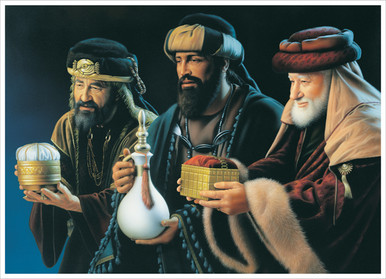
Out of all the characters of the Christmas story, I find the magi the most interesting. The historical record of the magi can be found in Matthew 2:1-12, but over the years, as the Christmas story is told over and over again, legends arose about these magi, hence why they got renamed “wise men” and “three kings.” Usually, I quickly dismiss such legends because I don’t want confuse legend with the historically accurate inspired Word of God. One of these legends, however, I do like, just because it displays the symbolism behind the gifts the magi brought. The legend states that one of them was a young man, and in his youthful idealism he looked for a good and pure king, who would rule the people equally and fairly. He carried gold, a fitting gift for king. Another was middle-aged man. He had pushed aside such idealistic hope, and now he wanted the answer to deep the questions of life, ones about origins, meaning, morals and destiny. He realized only a God could answer such questions, and so sought to find God. His gift was frankincense with which to worship God, an incense offered to God as a sacrifice. The third was an elderly man. He was well aware his life was drawing to and end, and death would be near. Looking back on that life, all he could notice was that it was stained with in. He longed to discover a Savior. Through his studies, as well as logic and reasoning, he concluded that a Savior must be a sufferer to pay for his sins, even to point of death. He took with him the gift of myrrh, used to make healing medicine and perfume to embalm the dead.


I can neither affirm this legend as the inspired Word of God, nor can I confirm the historical accuracy of this legend, but this legend does one thing right. It displays and explains the three gifts of the magi very well. Most interesting is relating the symbolism of the gifts to the purpose of the magi’s visit: to worship. We know from the historically accurate Word of God that the magi came to worship the baby Jesus. There’s no doubt about that; just look it up in Matthew 2:2,11. But pay close attention to how they worship. They don’t surround him and sing songs to him. Instead, they worship him by giving him gifts. Also note that these gifts don’t just represent who Jesus is, but they also might reflect the giver and what the giver seeks in Jesus.

If you were to go to Bethlehem and go to the tradition spot of the manger, this is what it looks like now.
Maybe the magi can teach us something about passionate spirituality and vibrant worship. Now I suppose we could take a pilgrimage to Bethlehem, and we could leave at the traditional site of the manger a gift to that represents us and how we see Jesus. But I believe Paul provides us a more practical way to worship Jesus through gift giving. He provides those instructions in Romans 12:3-8.


Below you’ll see the passage, but you’ll notice I start the passage with Romans 12:1. That’s because I believe Romans 12:1-8 should be read as one paragraph, and I want to keep it in context. Some Bible translations will reflect this, while other Bible versions do not. I don’t have the space or time to teach you Greek grammar or syntax to help defend my position, but I know you remember your English classes, which taught you English grammar and syntax. Remember that that the first sentence of a paragraph is your topic sentence, while the following sentence go in detail about the topic. Keep that in mind when you read Romans 12:1-8.


Romans 12:1-2 NIV (1984 ed.)-

1Therefore, I urge you, brothers, in view of God’s mercy, to offer your bodies as living sacrifices, holy and pleasing to God—this is your spiritual act of worship. 2 Do not conform any longer to the pattern of this world, but be transformed by the renewing of your mind. Then you will be able to test and approve what God’s will is—his good, pleasing and perfect will. 3 For by the grace given me I say to every one of you: Do not think of yourself more highly than you ought, but rather think of yourself with sober judgment, in accordance with the measure of faith God has given you. 4 Just as each of us has one body with many members, and these members do not all have the same function, 5 so in Christ we who are many form one body, and each member belongs to all the others. 6 We have different gifts, according to the grace given us. If a man’s gift is prophesying, let him use it in proportion to his faith. 7 If it is serving, let him serve; if it is teaching, let him teach; 8 if it is encouraging, let him encourage; if it is contributing to the needs of others, let him give generously; if it is leadership, let him govern diligently; if it is showing mercy, let him do it cheerfully


Remember that the first sentence of the paragraph is the topic sentence. Paul’s topic sentence, if I may summarize Romans 12:1, is a command to offer their bodies as living sacrifices, which is their spiritual act of worship. Also remember that the term “living sacrifice” is a paradox. Both the Jewish Christians and Gentile Christians, familiar with the Jewish and pagan sacrificial system respectively, would tell you a sacrifice is not at all living, but it is very much dead. The term living sacrifice needs explanation, and Paul does so in Romans 12:2. A living sacrifice, to paraphrase Romans 12:2, is someone who no longer conforms to the pattern of the world, but is transformed by the renewing of the mind. That’s all internal, so how does someone live that externally? Romans 12:3-8 explains how to live out their spiritual act of worship.


12:3. Paul address the believers here on a personal level, as if he were there, speaking live to each one individually. Verse 3 begins with “For the grace given me.” Grace can mean, when used as an object like it is used here, “a spiritual gift that the Lord has given out of his graces.” Considering the rest of the paragraph goes on to talk about spiritual gifts, this definition would work here. With grace and spiritual gifts in mind, Paul issues a command to his readers. In this command, Paul plays around with a couple forms of the word σωφρονέω (sophroneo) “think” in this verse.  Since God has graced everyone with spiritual gifts, Paul commands everyone to not think of himself more highly than he ought. The idiom, “Don’t get a big a head” fits here. Christians with an inflated ego have no place in the church! Instead of having a big head, Paul instructs the believers to think of themselves in “sober judgment.” The Greek word for sober judgment, σωφρονεῖν (sophronein), might more literally translate to “sound thinking,” but many other words could communicate “sound thinking.” Paul picks this word for a good reason. To use another metaphor, the believers in Rome, especially those with sign gifts, might have become egoholics, drunk with their own ego. In this command Paul instructs the Christians in Rome to sober up their judgment with sound thinking.


Verse 3 closes with the phrase “in accordance with the measure of faith God has given you.” The measure of faith does not mean that people can have different amounts of salvation. The measure of faith does not mean that other people can have different levels of faith. Rather, quite the opposite. We all share the same faith, no matter how different people in a church can be. This faith levels the playing field for all Christians within a church. This faith is what qualifies us for our spiritual gifts, give us our spiritual gifts, and it determines how much or little we should use our gifts. Once again, the measure of faith gives us a healthy balance on how to think of ourselves with our spiritual gifts. A healthy way of viewing yourself is to is to view you as God views you. Not only does it give you a healthy self-esteem, but it also prevents you from getting a big head. This balance of humility and self-esteem should also give a healthy awareness of the importance and significance of the Christian contributing to the church. This will be helpful to remember as we enter our talk about spiritual gifts. Spiritual gifts help give a healthy balance between humility and self-esteem. We should not think of our spiritual gifts more highly than they ought to be, but we should use them with sober judgment, in accordance to the faith God has given us. Remembering that the Holy Spirit empowers us with our spiritual gifts to glorify God keeps us in check. We cannot use our spiritual gifts to glorify ourselves, for that’s now what they are meant for.


12:4. Verses 4 starts off by emphasizing one body has many parts. This emphasis is to demonstrate that each body part has its own function, and therefore each body part has a different use for the body. A body all of one body part would not function, so a healthy body needs different body parts with different functions. The body parts work together to serve the body, not the body serving the body parts. When the body is healthy, the rest of the members are also healthy.


12:5. Verse 5 explains the illustration in verse 4. Just like a body has distinct body parts to perform certain functions, so the metaphorical Body of Christ, the church, has many distinct persons that come together to form one body, the Body of Christ. Just like the body has a diversity of body parts, they are all unified as one body. Unity in diversity will become the theme for the rest of the paragraph. God intended the Christian to be a communal one, not an individual one. Christians need the church, and the church needs Christians. When the distinct Christians in the church come together to build up the church or advance the kingdom of God, that’s what unites them in Christ. The metaphor of the body also reminds us that the Christian is to serve the church more than the church is to serve the Christian. When the Body of Christ mutually dependent on one another’s spiritual gift, you have a healthy Body of Christ. But once again, this can only happen if every Christian within the church views themselves and their gifts in the light of the grace God has given them.


12:6. Verse 6 begins a run-on sentence, which will not end until verse 8. Note how this verse starts off with “the graces given us,” whereas verse 3 begins with “the grace given me.” The same grace that made Paul who he was now worked wonders through the church at Rome. Verse 6 utilizes a beautiful wordplay. The Greek word used for spiritual is gift is χάρισμα (charismata), and the Greek word is χάρις (charis). This word play reminds the reader that God’s grace is the source of our spiritual gifts. This word play also reminds the reader that the purpose of God giving spiritual gifts to Christians is that so the Christian may by the tool or method of God’s blessing. Therefore, we should our spiritual gifts to grace others with God’s grace. Verse 6 brings the passage back to the individual level. Each individual believer has his or her own unique, distinct spiritual gift. Christians shouldn’t fret of what spiritual gifts that don’t have, what spiritual gifts other have, or even how other Christians use those other gifts. Nothing can be worse for a church when a Christian over-emphasizes or belittles a spiritual gift, whether that be someone else’s spiritual gift or his/her own. The Christian’s only concern is that he or she is using his or her own gifts, and he or she is using those gifts actively and energetically. In light of the previous verses, however, the reader needs to remember that such a spiritual gift needs to be utilized as God intended.


Paul lists prophecy as the first spiritual gift. Indeed, the Greek word used here is the word which transliterate and translate to get the word “prophecy.” Someone might be tempted to think of prophecy as simply predicting the future accurately, like a fortune teller, but prophecy meant so much more than just that. In fact, prophecy can talk of the past! Prophecy also included inspired utterances, and even sometimes just preaching. To sum it up in short, prophecy means proclaiming God’s message. Perhaps Paul listed this spiritual gift first because without God’s mouthpiece in the church speaking God’s Words, the church wouldn’t know how to prepare themselves to faithfully serve God. Notice how this gift is the only one that has the longest adverbial phrase “in proportion to his faith.” The phrase only appears here in the Old Testament. We know the phrase accurately translates into “measure” because it was used in the mathematics of measuring in the classical Greek period, but that doesn’t help ups theologically. We get a hint of what this means from a parallel passage about spiritual gifts in 1 Corinthians 12-14. The church in Corinth was divided over spiritual gifts. Those who thought they had the “better spiritual gifts” (like prophecy) would uplift themselves because they had that spiritual gift, and they would put others down who didn’t have that spiritual gift. Maybe those who didn’t have that special spiritual gift might act or pretend like they did, just to avoid such humiliation. Paul instructs the church in Rome to that those who do not have the spiritual gift should not feel pressure to prophecy if they do not have that spiritual gift. In order to keep it in check, Paul commands those who have the spiritual gift the prophecy to use it in healthy proportion. The spiritual gift of prophecy should neither be overused or underused. It should be used in relationship to the truth already revealed to the church. By doing so, no one will treat prophecy like an extra special gift.


12:7. Paul lists teaching and service as the next two spiritual gifts. In the original Greek New Testament, the Greek word for service, διακονία (diakonia), is where we get the English word deacon. Earlier English translations would traditionally translate the spiritual gift as the gift of ministry, but modern-day English translations keep it simply to “serving.” Both “ministering” and “serving” are broad words, so neither really help understand what the  Serving might be in relationship the leadership mentioned in the next verse. Just as someone needs to lead in a ministry, someone needs to follow. Some have suggested service refers to the administrative tasks in a church. Today, this could mean everything from folding bulletins to collecting & counting the offering. Others have suggested service related to the ministry of reconciliation. If two members of the church did not get along, the deacon would step in to mediate until reconciliation is achieved. Service could also refer to caring for physical needs of the church.

Teaching differs from prophecy here in the sense a teacher transmits the doctrines and theologies that the prophet preaches, helps the church understand them, and then teaches the congregation how to live these truths out. Some interpreters have even suggested translating this spiritual gift as “mentoring,” for the teacher was more concerned about teaching the Christians how to live out the prophet’s words. Looking at this 2 independent clauses separately, the reader might forget the purpose of Paul listing the spiritual gifts. Therefore, it might be necessary to translate 12:7 as, “If God has given us the ability to teach, we should help the believers by teaching. If God has given us the ability to serve, we should help Christians by serving them.”


12:8. Encouraging could be as broad as other speaking ministries in the church beside prophesying and teaching. The gift of encouraging aims at the emotions and will. The encourager further emphasizes the what the preacher has preached and the teacher. If the prophet speaks the Word of God, and the teacher teaches them how to live out that the word, then the encourager encourages the church to heed God’s Word apply it to their lives. Encouraging is just as important as prophesying or teaching!  If God gave the believer the spiritual gift of encouraging, he or she should use it encourage other believers who need words of encouragement or the like. Someone might naturally think of the gift contributing as giving offerings, but it doesn’t need to be reduced to that. Contributing can be anything. Since God gives to his people in many forms, Christians can give in any form. In any case, if any Christian has the spiritual gift of giving, he or she should give generously and without skimping, and sincerely, without hidden or selfish motives.

 The spiritual gift of leadership should not be mistaken for any official title. Paul simply instructs the believers that if any ministry in the church lacks the guidance of leadership, the church should seek someone with the gift of leadership to fill that role. Paul also commands those with the spiritual gift of leadership to govern diligently.. Instead, Paul might be simply saying, “If a ministry in the church lacks direction or goals, don’t just get anyone in the ministry to supervise them. Find a leader who had the spiritual gift of leadership to help them!” Whether that is the case or not, it is clear that the spiritual gift of leaders is not to give the Christian the power, but rather, by leading, they empower the church. The adverb diligently emphasizes that someone with the gift of leadership should not lead halfheartedly lazily. Rather, a good leader should invest his energy in serving the church in this way.


Finally, Paul lists the gift of mercy. To those with the gift of mercy, Paul instructs them to practice mercy cheerfully. Yes, that too, sounds exactly what it should be. Those with the gift of mercy should help those who need mercy from life and society, such as the poor, the hungry, the elderly, the widow and the orphan. Mercy should be practiced with happiness, smiling, and without any sadness. Those with the gift of mercy should show how grateful and joyful they are for having such a spiritual gift. Those they help do need someone to make them feel like they are a trouble or a burden. Life and society has already done that for them. A Christian with the gift of mercy should exercise his or her gift cheerfully, so the person feels loved and appreciated in this life.


If I were to sum up Romans 12:6-9, I would use the motto of the New England Patriots: Do your job. This motto helped the New England Patriots win Super Bowl LI. Simply put, the motto means that each player has an assignment, and each player is expected to execute that assignment. The players know exactly where to be. They know how to execute the game plan. They push themselves to improve their skills. See, this is why football is my favorite sport. In sports like basketball or hockey, everyone is responsible for passing, shooting, blocking and stealing, regardless of the position you play. In football, roles change with different positions. Quarterbacks are responsible to pass. Running backs are responsible to run (and occasionally catch). Wide receivers are responsible to catch the ball, and then run with it. Tight ends help the quarterback either by catching his passes or protecting him with the offensive line. The offensive line protects the quarterback. Even on defense, while everyone can tackle, sack a land intercept, the defensive line primary sacks, while the secondary primarily intercepts. What a good metaphor for the church! God has given you a spiritual gift to put you to work in the church. Now to what God has spiritually gifted you to do so.


Now that we have detailed understanding of the spiritual gifts mentioned in Romans 12:3-8, let’s put them back into context. Remember these spiritual gifts were mentioned in the supporting sentences of a paragraph. The topic sentence of this paragraph was a command to offer their bodies as living sacrifices, which is a spiritual act of worship. Put it together, and what do you get? When Christian exercise their spiritual gifts in the church, they worship God!


Therefore, I feel confident that I can make a bold statement: there is no one in the church who doesn’t like to worship! Even if you honest enough to confess “I dislike worship,” or even if you willing to admit “I struggle to worship” or “I have to force myself to worship,” I don’t believe it, and neither should the people saying those things. If you think those thoughts or feel that way, you’ve been given the wrong definition of worship. For my Church at Worship class in seminary, I studied the top 2 Hebrew words for worship in the Hebrew Old Testament and the top 2 Greek words for worship in the Greek New Testament, and from those 2 Hebrew words and those 2 Greek words, I constructed this definition: Worship is when a person voluntarily serves God (Father, Son and Holy Spirit) with his thoughts, speech and actions, in a way that demonstrates loyalty, submission and honor, which only the Lord deserves. Notice my definition does not go into more detail on how to do that, and I left it that way on purpose. I believe Romans 12:3-8 teaches us that those thoughts, those words and those actions come down to our spiritual gifts, or how God made us and how God equipped us.


I can testify to this in my life. Early on, in 6th grade, I learned that the Lord gave me the spiritual gift of knowledge and prophecy. At the time, I had no idea how to use that, except to get A’s in my Bible class at my Mennonite middle school (clearly, I did not fully comprehend spiritual gifts at the age of 12). I trusted the Lord with my spiritual gifts, and ever since, I have seen further equip men and build me up in regards to these spiritual gifts. 8 years of Bible Quizzing, 4 years of working for Child Evangelism Fellowship as a Summer Missionary, 4 years of undergrad at Lancaster Bible College and 6 years at Evangelical Seminary all aimed at building up these spiritual gifts God has given me. At this point in my life, I believe the Lord continues to push me, now asking me to earn my Ph.D in Bible. Now wouldn’t be odd if God spoke to me and said, “Graham, I have brought you through 8 years of Bible Quizzing, 4 years of working for Child Evangelism Fellowship as a Summer Missionary, 4 years of undergrad at Lancaster Bible College and 6 years at Evangelical Seminary. And now, I want you to be…A LUMBERJACK! Leaping from tree to tree!  As they float down the mighty rivers of British Columbia!  With your girl by your side! Now sing: ‘Oh, I’m a lumberjack and I’m okay, I sleep all night and I work all day!’” (I’m going to stop there before it gets raunchy.) Yes, I know that’s a silly example, possibly too silly, but so many Christians act this way. Either they don’t know their spiritual gifts, or they know them but dismiss them. Either way, Christians think that their God wants them to worship contrary to how God made them or how God equipped them.


At my church, Stony Brook Mennonite Church, the New Church Development process has revealed, through surveys of the congregation, that the congregation feels like the church lack passionate spirituality and vibrant worship. Such thinking and feeling must come a wrong definition of worship. Honestly, I can’t see it. I can worship happening in the church, even where you may not see it. I see Lois worshipping when she collects the soap and the school bags for MCC. I see MaryAnne worshipping when she plans events for the women at Reach Out. I see Shawn worshipping when fixes up the church building, and I see Dawn worship as she balances the budge. I hear about Ron worshipping when I hear your testimonies about maintaining the cemetery, even if that’s mowing the lawn or adjusting tombstones! I see Lorie worshipping when she plans fellowship meals, community meals and rescue mission meals. And I see Carlton worshipping as listens to the congregation’s concerns as the member-at-large. Maybe this sounds like you. Perhaps you serve a similar role or function at your church. I want to encourage you right now by telling you are worshipping! Romans 12:3-8 teaches us that’s all worshipping. See, you can worship, and I encourage you to continue worshipping in this way.  As for me, my spiritual gifts are knowledge, teaching and prophecy. I worship by teaching Sunday School and preaching sermons. Those Sundays where I end up doing both, I always get concerns if I’m overwhelmed. That could be the furthest from the truth. God made me this way, God equipped me this way, so I love doing teaching and preaching, and I enjoy preaching and teaching because I know I worship God and serve the church by teaching and preaching. If I stopped teaching or preaching in the church, I would be doing a huge disservice to both God and the church.


Now you might be encouraged, now that you know you can worship, and you possibly have been worshipping without knowing, but you’re not off the hook just yet. If a may borrow another metaphor from the world of football, God did not create and equip Christians to become church benchwarmers. You, as a Christian are not meant to keep the pew warm every Sunday morning. I already said I would be doing God and the church a disservice if I did not use my spiritual gifts, and now I will say that you are doing your God and your church a huge disservice if you are not using your spiritual gifts. True, God does not expect you to worship or serve in a way that’s contrary to the way he made and equipped you, but he does expect you to worship and serve in the way that he has created you, especially if you know your spiritual gifts. If you don’t know your spiritual gifts, this is probably what’s hindering you from passionate spirituality and vibrant worship. Get to know your spiritual gifts, so you can worship vibrantly and serve the church. If you do know spiritual gifts, find a way use them to worship God and serve the church. On the flip side, I want you to make yourself aware of the needs within the church. Then I want you to think to yourself, “Is there anywhere where my spiritual gifts can help?” If you can honestly say no, then you are off the hook. To be sure if you are honest, I offer what I call “The Mirror Test.” Look at yourself in the mirror and say, “My spiritual gifts do no equip me for that ministry.” If you say into a mirror, and you laugh or get angry, you know you’re lying to yourself. Serve.


If you can say that without laughing or getting angry, you’re still not off the hook. Your new job is now to pray for someone to come to this church, who is spiritually gifted in that way, who can served the church in that need. One of my biggest pet peeves is when I hear an announcement in the church go something like this: “I need someone fill an opening for a Sunday School teacher. Please consider volunteering. Anyone can do it.” No! That’s not what Romans 12:3-8 says. Romans 12:3-8 says that God has spiritual gifted certain people to equip them for certain roles in the church. Not everyone can do it! I like how Bob Kauflin says it his book Worship Matters, “When Moses had to find men to oversee the construction of the tabernacle, he didn’t pass around a sign-up list. He chose craftsmen whom God had gifted with 'skill and intelligence' (Exodus 36:1).” God has in mind someone to fulfill that needed role in a church. That person may already attend the church, or that person may not. If he does not attend that church, God will call that person to come the church a need, and a humbly obedient Christian will answer the call. This stresses the importance of praying for needs in the church. If you serve your church and still have open spots, pray that God will fill them.


Finally, I believe one last lesson we can learn from Romans 12:3-8. Romans 12:3-8 emphasizes unity through diversity. We all come together to worship God, but we worship God different because God has gifted us differently. Therefore, we cannot tell other Christians they worship wrongly because they worship differently. Different worship doesn’t always necessarily mean wrong worship or lacking worship. Once again, I believe Bob Kauflin words it well in his book Worship Matters, “Our highest priority when we gather with the church is not our own personal expressiveness [in worship], but the privilege of serving others.” When we come together to worship, let us remember who we worship. If we concern ourselves with how people worship differently than us, our audience is not God, but ourselves.


One more football illustration to make my point. Carson Wentz is the quarterback for the Philadelphia Eagles. When you watch him practice or warm up, you’ll see his clothing (sometimes his shirts, sometimes his cleats) have inscribed on them “AO1.” “AO1” stands for “Audience of 1.” It is Carson Wentz’s motto. It means that whatever he is doing, whether that be school or work (for him, that’s playing football) or hobbies, he does it as the Lord is his only audience. That’s powerful to hear that coming from the mouth of Carson Wentz. Carson Wentz probably doesn’t go to church on Sunday mornings to belt out praise and worship songs. On Sunday mornings, if anything, he’s probably warming up his arm. Carson Wentz, however, has discovered the beauty using your God-given gifts and talents as worship. He has combined his faith with his quarterbacking talent to worship the Lord on the playing field. He teaches a weekly Bible to his fellow players. God has accepted such an offering. Since Carson Wentz has joined the Philadelphia Eagles, 6 Eagles players have been baptized. And of course, the Philadelphia went 10-1 in their first 11 games. If Carson Wentz can worship the Lord and serve others through his God-given gifts and talents outside church on Sunday morning, we can too!


In closing, I invite you to pray. Pray that the Lord will reveal to you the spiritual gifts and talents that he has given you, whether you know of them or not. Then, pray to God, asking him to reveal to you how you can use the spiritual gifts and talents to serve the church and worship him, and also pray the Holy Spirit will encourage and motivate you to fill it. Some of you will need a tap on the shoulder, some of you will need a smack on the head, and some of you need a swift kick in the butt, but it needs to be done. Next, pray to the Lord that he may open your eyes and reveal to you ministries lacking in your church open spots in current ministries. Finally, if you can honestly and sincerely say that you cannot fill those positions, pray that God will rise up someone to fulfill those positions. May we rise up to serve the church, and thus worship God.

Saturday, October 31, 2009

9 Ways the modern-day* church has gone wrong with worship

Ok, this is something that has been on my heart since fall 2007 (perhaps attending LBC started it), but I have repressed for the benefit of not harming any relationships in the body of Christ. But as we all know, if we fill the gun power keg too full, and if it kept it the heat too long, it might spontaneously combust into a huge explosion. This is something I cannot hold back anymore. I entrust that I can get appropriate feedback from trusted people, instead of just hateful spews from people who barely know me. But I can no longer turn my head and ignore what is going on in the worship time. There are just some things that irk me about the way we have approached worship in the church. I hope that someday worship will be reformed, just like Martin Luther reformed the church. I may not have 95 Thesis, but I do have at least 9 points that the church needs to address to be able to successfully reform worship.

9 ways the modern-day* church has gone wrong with worship


  1. Worship is self-centered. It's all about me.
  2. Worship is all about the emotions
  3. Worship songs are not always Biblically accurate
  4. Worship songs tend to focus more on the death and resurrection
  5. Worship teams does not lead, but rather performs
  6. When worship teams do "lead," they are commanding
  7. There is not always unity in worship
  8. Worship can get too complex with instruments and sounds
  9. Worship and the rest of the service are separate, where worship becomes the center


But before I go on, let me say that these observations I had made were in a "scientific" way. How is it scientific? I kept score; I did a survey. In my notebook, I made 7 columns to find 7 things I thought I would find in worship songs: number of times God is mentioned explicitly (Lord, God, Jesus, Christ, Holy Spirit, Yahweh, etc.), number of times God is mentioned implicitly (any title of God or Jesus that does not use God or Jesus, or any time "You" is used mentioning God or Jesus, but not really stated in the verse or chorus), numbers of time the self is mentioned (I, me, my, myself, etc.), number of times "you" is used (an altruistic use of "you," the ones not in reference to God), number of times the church or the Body of Christ is mentioned (pretty much "we"), number of times the creation is mentioned to worship God, and the number of times the passion weekend and redemption is mentioned (this is Christ's death, resurrection, or any redemption themes, like paying for sins, etc.). These are my results:

Times God/Jesus is explicitly mentioned: 108 times
Times God/Jesus is implicitly mentioned: 138 times
Times God/Jesus is mentioned altogether: 246 times (top 2 added together)
Times the self (I, me, etc.) is mentioned: 247 times
Times the alturistic sense of "you" is used: 1 time
Times the body of Christ/church is mentioned: 6 times
Times the creation is used in praise: 49 times
Times passion week and redemption is used: 56 times

Possible Conclusions:
-We focus more about ourselves rather than God
-We focus more on 3 days of Christ's early life over the whole redemptive history
-While we might understand worship, the non-Christian or new Christian may not
-Very little time is dedicated to building each other up

1. Worship is self-centered. It's all about me.
One of the most eye-opening discoveries in my survey is that the column that won was the high numbers that the self was mentioned, even more than God implicitly mentioned or God explicitly mentioned. I can only naturally conclude that in praise and worship, we sing more about ourselves than about God. In a way, we're not worshipping God, but ourselves, or at least our relationship of God. Do I dare even say we're asking God to praise us for deciding to follow Him? I blame the modern era influence on Christianity during the 20th century. 20th century modern philosophy is very centered around the self. Now don't get me wrong. I do believe that salvation comes with every one's individual decision to follow Christ. But we forget that when we do make this individual decision, we become part of a community, the Body of Christ. One of the reasons we go to church is to help fellow Christians be edified by one another. But the praise and worship time seems to say different. The worshipper sings so little about the church community and even less about others in the church community. It means praise and worship has become narcissistic, which is not Christian.

2. Worship is all about the emotions
Are you familiar with the term "sensual"? Today it has a bad reputation because it is often seen as a synonym to the word "sexual". But the etomology of the word shows the word sensual simply means "exciting, arousing, or appealing to the senses". I want to argue that all music gives us a sensual experience. We play music that reflects our emotions. We play upbeat songs when we are happy, we play downbeat songs when we're sad, and we play loud music when we're angry. No matter what genre you like listening to, this is true. May I go further on to this is true for both secular and religious music. The Bible does this. In David's good times, he wrote Psalms of praise, and in David's bad times, he wrote painful laments. So emotional involvement in praise and worship isn't fully wrong, but it isn't fully right. We have to remember our emotions is only one part of us, one part among many (physical, mental, social, spiritual, etc.). We also have to be careful with driving up emotions so high. Emotional thinking and decision-making isn't always the wisest. It may contradict the logical answer. Sometimes feeling good will become more important than expressing truths. And if that gets to an extreme, a wolf in sheep's clothing can sneak in, exchange the truths with lies, and we won't notice because all we care about is the emotional high. It calls for extra accountability to the worship leaders. Lastly, extra attention on the emotions can cause the intellect or anyone who is less in tune with emotions to feel left out of the worship experience. God wants us to worship Him in spirit and in truth, both emotionally and intellectually.

3. Worship songs are not always Biblically accurate

This piggy-backs off the last point. When all we care about is the emotional connection, we ignore the heresies and blasphemies that enter our praise songs. We need to make sure the songs we sing speak Biblical truth. Anything else is a lie. I can go on and on with this, but I will try to limit to a few examples. First example: "Come, Now is the Time to Worship." The song says in one line, "Come, just as you are to worship." This is not right. The Bible says we need to prepare and cleanse our hearts and minds as we enter God's presence. This is found in both the Old Testament and in the New Testament. Second example: "Above All." Yeah, it's a cute song about how Jesus died for us, but the biggest error is what i said in point 1: it's self-centered. Hello, Jesus was thinking about [God] the Father's Will above all. Because Jesus always put the Father before His ministry, just as we should. Third example: "Blessed Be Your Name." Now this one isn't as bad because it is taken from Scripture. The only problem is that it is used out of context. It's true that the bridge is a taken right out of the book of Job. But when Job says that, he is lamenting in the deepest sorrows. We sing it in a upbeat, happy praise. Trust me, it's better sung as a lament. Fourth example: "The Heart of Worship." It says "I'll bring you more than a song." Hello, this is a song! And people get caught up in the song, too! I don't know, I just never got it. And there is enough more. I once heard this one song (forget what it was called, but it's not like I want to remember) where the song said that something is missing in life, and that the writer is searching for it, but left it at that! No mention of the Lord, Jesus, the Holy Spirit, or how God gives more to life. Worship songs have to come back to praising Jesus in a Biblical way. Furthermore, I call for worship songs to mention God and Jesus more explicitly. Notice in my survey that Jesus and God's name usually came in the form of "You" or some title given to either part of the trinity. Yes, the mature Christian on spiritual meat knows what the song is about, but the non-Christian or the newborn Christian on spiritual milk may be clueless, and it wouldn't be edifying to them. It is key for church to be edifying to all, which means understandable to all.

4. Worship songs tend to focus more on the death and resurrection
My survey alone should show that is true. The survery showed we sung more about redemptive themes than even the creation. Now in writing this, I don't want it to seem like I'm favoring hymns in worship just for the sake of favoring hymns, but if there is one thing I like about hymns, it's the variety. Open a hymnal (if you can find one), and you'll find hymns on peace, hope, love, joy, prayer, praise, thanksgiving, suffering, wisdom and so much more. You can find hymns on the advent of Christ's birth, Christ's birth, Christ's ministry, Christ's works, Christ's death, Christ's resurrection, Christ's ascension, and Christ's Body, filled with the Holy Spirit. But when it comes to comtemporary praise and worship, most, if not all, songs can be placed in two categories: praising God for His creation or praising God for his sacrifice. And the survery shows which one is more used. Is it wrong to sing praise of Christ's work on the cross. Not at all, or at least not fully. Where does it go wrong? When we can't move on. Let me explain better by explaining how worship has ended up just focusing on passion weekend (Good Friday to Resurrection Sunday). To briefly sum up the Bible and redemptive history, it can be done in 4 stage: creation, fall, redemption, re-creation. To say it in sentence form, "God created you, you fell into sin, Jesus saves those from sin who receive him, and makes them a new creation through sanctification." But over time the 20th century evangelical church has shaved off the ends of the redemptive story, leaving only the fall and redemption side in. So the evangelical's method of evangelism is saying to non-believers, "You have fallen into sin, but Jesus can save you from sin if you receive him." Is there anything wrong with this saying? No, but I believe this saying robs people of the full picture, of being wonderfully made in the image of God and, as Christians, being remade into a new creation. But no. Instead, it's just fall & redemption. The four parts are now: humans sin, Christ died, Christ, receive the gift. And this idea has sneaked into our worship time. Our worship singing is all about the fall and redemption. We keep reminding ourselves that we are fallen sinners, totally dependant upon Christ. Is this a lie? Not at all. But it does have a negative effect on us when we don't have the full redemption story on it. Ever feel guilty of your sin, even after being saved. Why would you be? Hebrews tells us that once we are saved, God remembers our sins no more. Romans says that if we are in Christ, there is no condemnation. So why do Christian still feel condemned? They are constantly reminded in worship they are sinners dependant on Christ's salvation, so they keep worshipping God in that aspect, as if God will not forgive them if they don't. Instead, what should be happening is we should be hearing more praise and worship songs that talk about re-creation and sanctification, so that we can grow in those areas. Sometimes I think God can do so much more with us if we moved on in the way of sanctification, and stop groveling at the cross, thanking for forgiveness that we have already received. It is like Jesus is crying out to use, "Yes, I get it you're thankful you're saved. Can we move on to working in my kingdom and in my ministry?" Or better yet, it is like Jesus is saying, "I am off the cross. Are you?" Finally, I'd to close with pointing out a Biblical proof for this: the Psalms. There is not just 1 genre of psalms. There are quite a few: laments, praising God for rescuing, praising God for who He is, and wisdom psalms. If the Psalms are in variety, shouldn't the comtemporary worship be as well?

5. Worship team does not lead, but rather performs
It's typical for the worship team, especially the leader of the team to be incredibly talented musically. Is there anything wrong with that? No. In fact, it seems like they are the first ones willing to do it. Do I think that musical talent should be the discerning factor in choosing a praise and worship band. I don't believe so. I do believe there is a difference between the spiritual gift of worship leader and musical talent. But the problem I am about to discuss can happen to worship leaders who are talented and not as talented; it just seems more prevailant in those who are musically talent. It might be because the worship team is musically talented, or it might be because the stage is set up like a concert. But whatever the cause, it seems like the worship team is performing than leading worship. First sign of a performing worship team: singers, especially the lead singer, uses his/her/their full octive range in singing. Obviously less talented singers in the audience/congregation aren't going to be able to reach these notes. So why are doing it? Second sign of a performing worship team: instrumental solos. Yeah that's cool to hear at a concert, but how is it edifying the rest of the congregation? I won't even rule out it's an act of worship to God, but the soloist is not leading the rest of the church with the soloist. Pretty much, today's worship scene is set up like this: the worship team is the performers, and the church congreation is the audience. It needs to switched as God is the audience, and the performers are both the worship team and the rest of the church congregation. It's time we define the lead in "worship leaders." They are worship leaders, not worship performers.

6. When worship team does "lead," they are commanding
Ever have a worship team tell you what to do, what to think or how to feel? I have a problem more with the last two then the first one, but let's go in order. Now I don't have a problem of worship leaders telling their audience to sit or stand. It tells the congregation, both members and visitors, what the appropriate stance or position is while worshipping. But I think when the worship teams tells the congregation to sing a certain way, say a certain line, or put their hands in a certain position, that goes to far. Those actions are suppose to be something that comes from the heart. Speaking of which, I can move on to my dislike of worship teams telling the congregation on how to think or feel. This is just wrong inside and outstide of worship. If you're telling me how to think or feel, and it's contrary to how I really think or feel, then changing it would not be genuine. And I might be getting something else out of the worship time, but if the worship team tells me to think/feel another way, I might feel wrong, and lose spiritual growth. God made everyone individually special, and the Body of Christ must recognize that it will create different worship styles. I believe the worship team's job is to encourage worship, no matter what the style.

7. There is not always unity in worship
This goes beyond the fact of the powerpoint not matching the worship team. Ever have this happen: half the worship team repeats a verse, another repeats the chorus? Or have the singers repeat a verse, while the instrument players repeating the chorus? This can lead the worshipping congregation confused on what to sing! Heck, that happens, too! The worshipping congregation goes to continue to song as normal, and the worship band decides to change order. Now we, as Christians, claim that the Holy Spirit is with us in worship, and that the Holy Spirit unites. This is true. But what do you say when you the above incidents happen? It is embarrassing! It's a bad witness of the Holy Spirit. If the Holy Spirit is there at worship, uniting us, this shouldn't happen. Now don't get me wrong: I claim both statements about the Holy Spirit as truth. So that leads me to want to question the motifs of the praise band when it does happen, especially if the praise band has been practicing too. But I will not question too much, so I don't have to face judgment. All I'm saying is that at least at hymns, the hymn leader would say what verse are being sung ahead of time.

8. Worship can get too complex with instruments and sounds

Sometimes I think worship can get too carried away with how we sound. First is the instruments. I think the biggest worship team I saw had 10 performers on stage: 4 guitars (lead, rhythm, bass, and acoustic), 2 pianists (baby grand piano & keyboard), 2 drummers (full drum set & double bongos), and 2 singers. Another time I saw 3 acousitic guitars. I turned to one of my friends, who is musically talented, and asked him, "Is there really a point to 3 acoustic guitars?" and his reply was "No, not really." Doesn't this kind of seem ridiculous? Truth to be told, if we really cared about sound, the better worship teams I've heard are the ones with the fewer instruments, the better. Ever listen to the Amish? They don't believe in playing instruments, and their voices are wonderful. Second in this subject is the singing. As I said above, some worship leaders will sing full octives. Others coordinate the church into 4-part singing. Still others don't care and just have everyone sing in unison. The worst causes is I heard worship leaders say in a low-tone, implicit, "nice" way, "If you can't sing, don't sing" (they will say something like "pause and silently think about the words" but that's what they mean). Last time I checked, Psalm 100:1 says to make joyful sound unto the Lord, not necessarily a pleasant sounding one. Point is that it's about the heart. It may even be true that the worshipper who sings "badly" might have a better heart in worship than someone singing "well." Third part would just be sound in general. This ranges anywhere from designing the church building to have good acoustics to installing microphones and speakers in the right place. For this I say the same I said for singing. It's not how we sound, but where our heart is.

9. Worship and the rest of the service is separate, where worship becomes the center
I've noticed the typical pattern for worship is: call to worship, praise and worship music, announcements, offering, sermon, prayer requests, bendiction. Sometimes prayer time comes between offering and sermon, but not the point. Somehow this setup is group in sections, instead of one whole thing. Thus, sometimes more attention is given to one than the other. The popular choice is the praise and worship time. I've seen people give their all in praise and worship, singly loudly and waving their arms, but then after they are unlively, so unlively it's like they are do. They zone out for rest of the service. Heck, I've even seen some people leave the sanctuary, and even leave the church, after the praise and worship time, as if church is done. Why is this? It could be something as simple as they put in all their energy in the beginning, and by the time praise and worship singing is over, they are out of juice and pooped. But I think there is something more. I think it's because they are in the wrong mindset. They believe that the preacher giving the sermon is merely the preacher's act of worship, not theirs. But this is only paritally true. Sure the preacher is worship God by preaching, but he's also doing it to edify church. He's giving you just as much spiritual food as praise and worship will. And if you believe as I, that the Holy Spirit is speaking through the preacher, then the Holy Spirit might be speaking to us in the sermon as in praise and worship singing. Then those that zone out will be missing out on God's Word. I know that I truthfully get more out of the sermon than the praise and worship music. If you give it a try, you might find that out as well. As an LBC chapel speaker once said, "If you refuse to listen to God through His Word the Bible, then why would God speak to you any other way?" This kind of goes back to my second point. Church, it is time you stop just feeling, and start thinking.

In closing, I want to leave you with a verse and an experience I had. The verse is Hebrews 5:13,14- "Anyone who lives on milk, still being an infant, is not acquainted with the teaching about righteousness. But solid food is for the mature, who by cosntant use have trained themselves to distinguish good from evil." I love the imagery the author (possibly Paul, because Paul uses the same imagery) uses here. When infants start eating, they have to start on milk first, but as they mature and need more calories, they move on to solid food. In fact, a lot of infant nutritionists say it's unhealthy to push solid food on an infant. But you ever think of this way: is it unhealthy to keep an infant on milk when it needs to move up to solid food? That might be denying the baby the important nutrients, like calories, that the infant needs to keep growing. I will tell you of the experience I had. I went on a fast for five days, having nothing but a quart of milk for every meal (which is about a half gallon a day). See what happened to me and try to connect it with the verse. Did I survive? Yes. Was I hospitalized? No. Did it keep me alive? With the help of God, yes. So on the surface level, it did its job. But deep down inside, I was lacking something. At the end of my milk "meals," I was still hungry. Even though it gave my the nutrients to stay alive, I robbed myself of other nutrients that were neccesary to grow. I could feel inside that I was lacking solid food, and I craved for it. I crave for something to fill me. Some days I felt aching muscles, and I wondered if that had anything to do with the fast. See the connection? While milk keeps us alive, we need to eventually move on to solid foods to keep growing strong. This is true in the spiritual aspects, too. See, I believe that when we are only focusing on a praise & worship time where the individal is center, where feelings are more imporant than thinking, and where passion week and redemption themes are the only themes mentioned, we are just feeding ourselves spiritual milk, the same we did as when we received Christ. When people who have been Christians for a long just feed themselves spiritual milk, they are depriving themselves of the nutrients they need to continue growing spiritually. This will leave them as weak as infants, depending on a "spiritual high" to keep themselves going. They will be aching and yearning for something more. Look at Hebrews 5:13,14 as an encouragement to grow up. Many of you Christians are ready to grow up after many years in the faith. But you must move on from your milk and eat solid food. I believe if we can approach and conquer these 9 ways, we as a church can move on to bigger and better things. Once again, I call the church to grow, taking on solid food instead of staying milk, and to start thinking.


*I chose the term "modern-day" although I was tempted to use "evangelical" instead because these problem seem prevailant in the evangelical church. Yet I've noticed these problems sometimes in the emergent church, as well as the pentacostal/charsmatic church. The only churches who have less of these problems are the older churches with older traditions. Therefore, I think the problem isn't a church movement issue, but rather a time period issue. Thus, I settled with the term "modern-day"

1 Samuel 1: Not Striking Deals But Surrendering Desires

Introduction In those grade school English classes, whether English composition classes or public speaking classes, both taught me that a st...